
Take an Official State-Approved Boater Safety Course
Not everyone needs a Florida Boating Safety Education ID Card. You’re exempt if you were born before January 1, 1988, hold a U.S. Coast Guard license, operate on private waters, or are supervised by someone with a card. Non-motorized vessels and boats under 10 HP also don’t require education. Out-of-state boaters with NASBLA-approved certification are accepted without re-certification.
Check if you qualify and get certified: Learn more at Recademics
The most straightforward exemption is also the biggest one: if you were born before January 1, 1988, you don’t need a Boating Safety Education ID Card in Florida.
This exemption is based on Florida Statute 327.395, which established the requirement for anyone born on or after that date. The logic: experienced boaters who were already on the water before the education law took effect didn’t need to be re-educated.
Being exempt from the education requirement doesn’t mean you can boat without ID. You still need to carry a photo ID (driver’s license, passport, etc.) with you on the water. FWC officers will ask for it, and you’ll need it if you’re stopped.
The exemption is specifically about not needing the Boating Safety Education ID Card—a different document entirely.
Anyone born before January 1, 1988, is now 36 years or older. While the law hasn’t changed, this exemption is becoming less relevant over time. Most boaters hitting the water today were born after 1988 and do need certification.
If you hold a valid U.S. Coast Guard license as a master of a vessel (or similar designation), you’re exempt from the Florida education requirement.
This applies to professional mariners, commercial boat captains, and others who’ve undergone federal licensing. The USCG license demonstrates marine knowledge at a level that exceeds state boating education standards, so Florida recognizes it as an equivalent.
If you hold one of these, Florida doesn’t require the state-specific Boating Safety Education card. Keep your USCG license with you as proof.
The exemption is blanket—it covers both commercial vessel operation and personal boating. If you’re licensed by the USCG, you’re good to go in Florida.
Operating on private, non-navigable waters doesn’t require a Boating Safety Education Card. If you own a pond or lake on your property (or have permission to boat there), and it’s not connected to Florida’s public waterways, you’re exempt.
The key: if the general public can legally navigate there or if it’s part of Florida’s waterway system, it’s public, and the education requirement applies.
The education requirement is partly about boater safety in shared waterways where collisions, accidents, and enforcement are concerns. On your own private pond, there’s less risk to the public, so the state doesn’t mandate it.
That said, safety is still important—especially for young or inexperienced boaters.
One of the most useful exemptions: you don’t need your own Boating Safety Education Card if you’re operating under the direct supervision of someone who has one.
The supervising adult must:
This applies to all ages. A 12-year-old can operate a motorboat if an adult with a card is supervising. A 50-year-old born after 1988 can operate if someone else with a card is in charge.
The supervisor doesn’t just have to be on the boat—they have to be responsible for it. This means:
Supervision is a learning tool, not a loophole. It’s designed to allow experience-building and teaching while someone accountable is present.
Once you’re operating independently (no supervisor), and you were born after January 1, 1988, you need your own card. You can’t claim supervision forever—at some point, you need to get certified.
The Boating Safety Education course takes 2–4 hours and costs about $40, so it’s not a major barrier.
You’re also exempt if you’re supervised by someone who is themselves exempt—for example, someone born before 1988.
This is less common but does happen. An older, experienced boater (born before 1988) doesn’t need a card themselves, but they can supervise a younger boater who doesn’t have one yet.
The supervised boater still can’t operate independently without their own card (if they were born after 1988), but supervision by an exempt person meets the requirement.
Kayaks, canoes, paddleboards, sailboats, and other non-motorized vessels do not require a Boating Safety Education Card, regardless of when you were born.
This exemption is straightforward: the education requirement is about motorized vessels, specifically those with 10+ horsepower. Paddling your kayak around doesn’t trigger it.
Even though you don’t need a boating license to paddle, life jacket requirements still apply. Children under 6 must wear a USCG-approved PFD on any vessel under 26 feet while underway. The USCG recommends PFDs for everyone, regardless of age.
Learn more: Florida Life Jacket Laws
Traditional sailboats without motors are exempt. But if your sailboat has an auxiliary motor with 10+ HP, and you were born after 1988, you need the card—because you have the motorized capability.
The education requirement applies to vessels with 10 or more horsepower. If your boat is under 10 HP, no Boating Safety Education Card is required, regardless of your birth date.
This is a practical exemption: small boats with minimal power pose less risk than larger, faster vessels, so the state doesn’t mandate education for them.
You should verify your boat’s actual HP rating. Check the manufacturer’s specifications or the registration. Some people mistakenly assume their small boat is under the threshold when it’s not.
If you’re renting or borrowing, ask the owner or rental company.
If you hold a NASBLA-approved boating safety certificate from another state, Florida recognizes it. You don’t need to take the Florida course again.
NASBLA (North American Safe Boating Association) sets standards for boating education across states. Florida honors NASBLA-approved certificates from any state, so if you took the course in Georgia, New York, or Texas, you’re good in Florida.
You’ll need to carry proof of your out-of-state certification. Keep your certificate or a digital copy accessible while boating.
This applies to NASBLA-approved boating safety education, not a simple boating accident or a “hunting license.” Check if your state certification is NASBLA-approved. If it is, you’re recognized in Florida.
Q: I’m 55 and was born in 1970. Do I need a Florida boating license?
A: No. You were born before January 1, 1988, so you’re exempt from the education requirement. You still need a photo ID on the water.
Q: I have my USCG master’s license. Do I need the Florida card?
A: No. Your federal license is recognized by Florida as an exemption.
Q: Can I operate my kayak without a boating license?
A: Yes. Non-motorized vessels don’t require the Boating Safety Education Card, regardless of your age or birth date.
Q: I’m teaching my 15-year-old to boat. Do they need a card if I’m supervising?
A: Not while you’re supervising (assuming you hold the card). But once they operate independently, and they were born after 1988, they’ll need their own card.
Q: My boat is 9 HP. Do I need the card?
A: No. Vessels under 10 HP are exempt. But make sure you know your boat’s actual horsepower—check the manufacturer specs.
Q: I have a boating certificate from California. Is it valid in Florida?
A: If it’s NASBLA-approved, yes. Most state certificates are, but verify. Contact the FWC or your certifying state to confirm.
Q: If I operate on a private pond, can I skip all safety education?
A: You’re technically exempt from the card requirement on private water, but that doesn’t mean you should skip education. Accidents happen on private water too. Completing a course is smart regardless of legal requirements.
Even if you’re exempt, getting a Boating Safety Education Card is a wise move. Here’s why:
The course is cheap (around $40) and fast (2–4 hours), so the barrier is low.
Recademics is a nationally recognized provider of outdoor recreation safety education, offering online certification courses for boating, hunter education, bowhunter education, off-highway vehicles (OHV/off-road), snowmobiles, and personal watercraft (PWC). Our courses are built around nationally established standards and regulatory frameworks, with alignment to NASBLA (boater education) and IHEA-USA (hunter and bowhunter education).
We currently have more than 26 state-approved courses issued directly by state agencies across the United States, including approvals in Texas, New York, Florida, California, Georgia, Alabama plus many more & with additional states pending. Every course is developed and maintained by subject-matter specialists, instructional designers, and state-reviewing authorities to ensure accuracy, compliance, and a high-quality learning experience.
Recademics focuses on clear instruction, accuracy, and straightforward pathways to certification for outdoor enthusiasts across multiple disciplines. Our goal is simple: make it easier to get certified, stay compliant, and enjoy the outdoors with confidence.
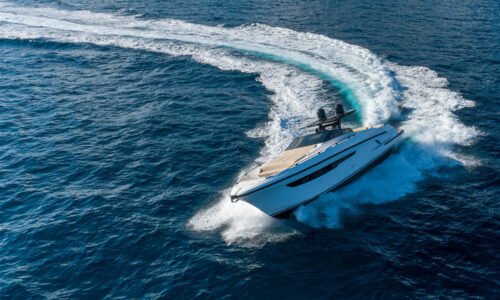
This is a FREE Boating course.