
Take an Official State-Approved Boater Safety Course
If you were born on or after January 1, 1988, yes — you need to meet Florida’s boating safety education requirement before you can rent and operate a motorized vessel with 10 horsepower or more. The fastest option for renters is the Florida Temporary Certificate, which you can earn online in minutes and is valid for 90 days.
For a permanent solution, you can take an FWC-approved boater safety course and receive a Boating Safety Education ID Card that’s valid for life.
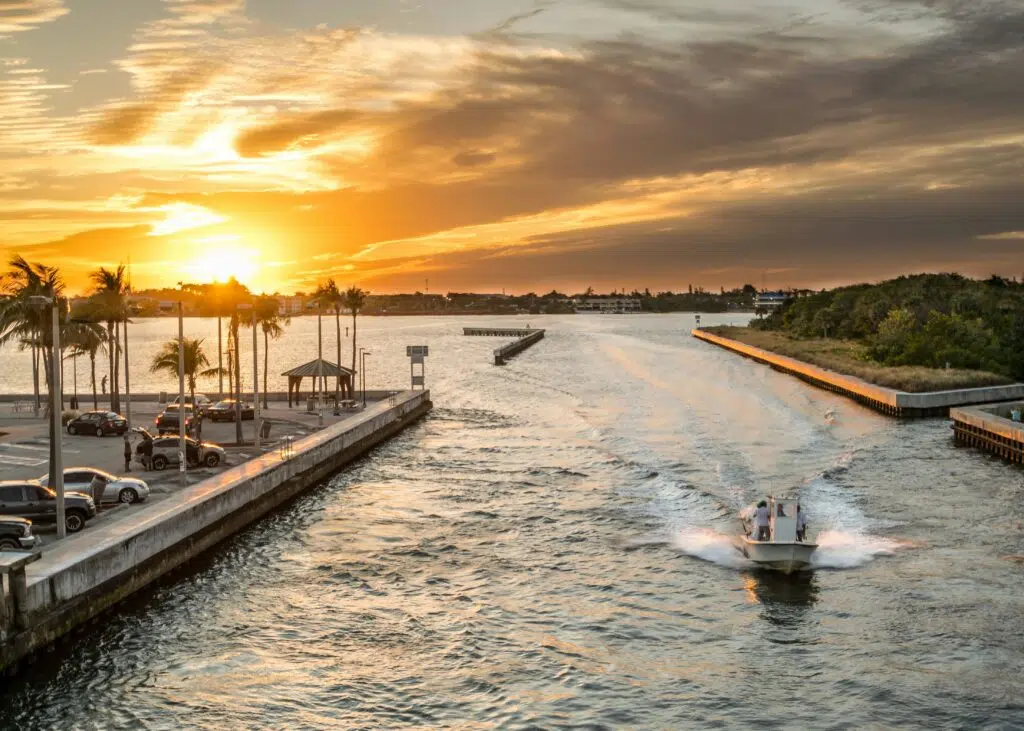
Florida law (Statute 327.395) requires anyone born on or after January 1, 1988 to carry proof of boating safety education when operating a motorized vessel of 10 horsepower or more — and that includes rented boats.
This means if you walk into a Florida marina or boat rental company and want to take a motorboat, pontoon, or personal watercraft out on the water, the rental operator is required to verify that you meet the state’s education requirement before handing over the keys.
There are a few scenarios where this does not apply:
For everyone else — tourists, Florida residents, and visitors alike — you need one of the approved forms of documentation before the rental company can let you operate the vessel.
Florida accepts several forms of boating education documentation at rental counters:
A Florida Boating Safety Education ID Card — This is the permanent card issued by the Florida Fish and Wildlife Conservation Commission (FWC) after you complete an approved boater safety course. It’s valid for life and is the gold standard. You can get yours online through an FWC-approved course.
A Temporary Certificate — Valid for 90 days, this is designed specifically for renters, tourists, and anyone who needs to get on the water quickly. More on this below.
A boating safety card from another state — If you already hold a NASBLA-approved boating education certificate from another state, Florida recognizes it. You’ll need to carry that card plus a photo ID. See our full breakdown of out-of-state boating license rules in Florida.
A Canadian Pleasure Craft Operator Card — Also accepted.
A U.S. Coast Guard master’s license — If you hold a USCG captain’s license, you’re covered.
The Temporary Certificate is the most popular path for vacation renters and same-day boaters. Here’s how it works.
The Florida Temporary Certificate is a short-form boating safety exam — not a full course. It tests basic boating safety knowledge and Florida-specific rules. Once you pass, you receive a certificate that lets you legally operate a rented motorized vessel in Florida for 90 days from the date of issuance.
Pricing varies by provider, but temporary certificate exams typically cost between $3 and $20. Some marina and livery operators also administer the exam on-site, sometimes at no additional charge as part of your rental agreement.
The temporary certificate is not a permanent boating license. It expires after 90 days and cannot be renewed — you’d need to retake the exam for another 90-day window. It also doesn’t count toward a permanent Boating Safety Education ID Card.
If you plan to boat in Florida regularly, the smarter long-term investment is completing a full FWC-approved boater safety course. The permanent ID card never expires and is accepted in all 50 states.
When you arrive at a Florida boat rental operation, expect the following:
Photo ID. Every operator, regardless of birth date, must present a valid government-issued photo ID.
Proof of boating education. If you were born on or after January 1, 1988, you’ll need to show one of the accepted documents listed above — your permanent Boating Safety Education ID Card, a temporary certificate, or an equivalent from another state.
Age verification. You must be at least 18 to rent a personal watercraft (jet ski) in Florida. For standard motorboats, rental companies set their own minimum age policies, but the state education requirement applies to anyone born on or after 1/1/1988 regardless of age. Read more about Florida boating age requirements.
Some rental operators provide a brief safety orientation in addition to checking your credentials. This is standard practice and separate from the state’s legal education requirement.
Personal watercraft (jet skis, WaveRunners, Sea-Doos) fall under the same boating education requirement as other motorized vessels. But there are additional rules:
For the complete rundown on PWC rules, see our guide to Florida jet ski license requirements.
Only if you were born before January 1, 1988. Everyone else needs either a permanent Boating Safety Education ID Card, a temporary certificate, or an accepted equivalent from another state or country.
The exam itself takes most people 15–30 minutes. You receive your certificate immediately upon passing. You can complete it online the same day you plan to rent.
No. The temporary certificate is a 90-day authorization specifically designed for short-term use. A permanent Boating Safety Education ID Card — sometimes called a “boating license” — requires completing a full FWC-approved safety course and is valid for life.
No. If you hold a NASBLA-approved boating safety certificate from another state, Florida recognizes it. Carry your card and a photo ID.
A rental company’s orientation or safety briefing does not replace the state education requirement. You still need an approved card or certificate. The company’s briefing is in addition to, not instead of, the legal requirement.
Some marina and livery operators are authorized to administer the exam on-site. Check with your rental company in advance to see if this is available. Otherwise, take it online before you arrive.
This is a FREE Boating course.