
Take an Official State-Approved Boater Safety Course
Non-motorized kayaks, canoes, and paddleboards do not require a license, registration, boat safety certificate, or operator certification in New Jersey. However, you must still carry a personal flotation device (PFD) for each person on board. From November 1 to May 1, you must wear your PFD while underway. If you add a motor of any kind—including a trolling motor—your kayak becomes a motorized vessel subject to all licensing, registration, and certification requirements. Learn more about New Jersey boating requirements on the New Jersey Boating License page.
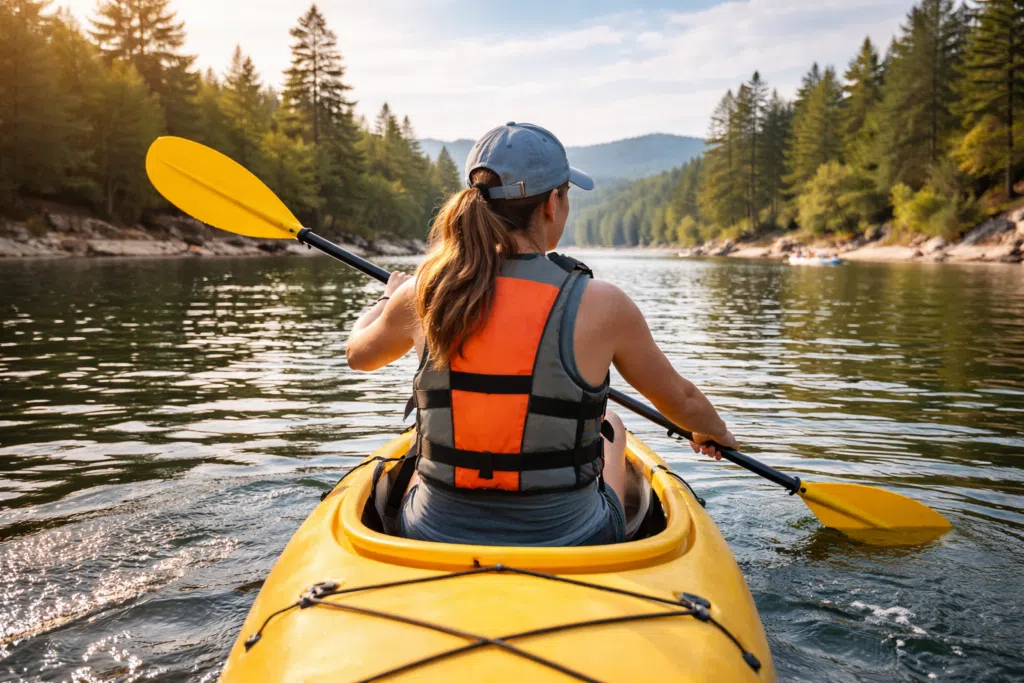
One of the great advantages of non-motorized kayaking in New Jersey is that it requires no license, registration, boating safety certificate, or operator certification. Anyone can legally operate a kayak on New Jersey waters without any formal credentials or permits. This accessibility makes kayaking an excellent entry point for people interested in experiencing New Jersey’s waterways.
However, freedom from licensing requirements does not mean freedom from all regulations. Even non-motorized kayakers must follow navigation rules, respect other waterway users, and comply with all applicable safety requirements. You must also follow any specific regulations that apply to the particular waterway where you are kayaking.
The absence of licensing requirements also does not diminish the importance of developing proper paddling skills and understanding water safety. Even experienced paddlers should take safety courses to learn about weather, water conditions, rescue techniques, and other aspects of safe kayaking. Self-education is the responsibility of every waterway user.
Because non-motorized kayaks are not subject to licensing requirements, New Jersey law establishes no minimum age for operating them. Even young children can legally paddle a kayak or canoe on New Jersey waters, provided they comply with all other safety regulations.
However, this legal freedom does not mean that young children should be unsupervised on the water. Parents and guardians should evaluate each child’s swimming ability, maturity level, water conditions, and other factors when deciding whether a child is ready for kayaking. Adult supervision, proper life jacket use, and appropriate water conditions are critical for child safety, regardless of what the law permits.
For more information on age requirements for powered boats, see our article on how old you have to be to drive a boat in New Jersey.
Although kayaking does not require a license or boating safety certificate, kayaks are vessels under New Jersey law and are subject to safety equipment requirements. Every kayak must have at least one wearable personal flotation device (life jacket) on board for each person paddling the kayak.
For recreational kayaking, you must carry the PFD—it does not always have to be worn. However, wearing your life jacket while paddling is the safest practice and is strongly recommended. In an emergency, an accessible but unworn PFD may be difficult to put on in time to prevent drowning, especially if you are separated from your kayak or unable to reach it quickly.
Different PFD types are appropriate for different kayaking styles. Kayak-specific PFDs are designed to allow mobility and comfort for paddlers while still providing excellent flotation. Try on different styles to find one that feels comfortable for extended periods on the water.
For detailed information on life jacket types and requirements, see our guide on New Jersey life jacket laws.
New Jersey’s cold weather requirements apply to all vessels, including kayaks, canoes, and stand-up paddleboards. From November 1 through May 1, everyone on vessels under 26 feet must wear a personal flotation device while underway and outside an enclosed cabin.
This requirement applies to kayaks, which are typically much smaller than 26 feet and have no enclosed cabin protection. During the cold weather period, you must actively wear your life jacket while paddling. Cold water can cause hypothermia and cold shock within minutes, making a worn life jacket essential for survival.
Cold weather kayaking requires additional preparation beyond summer paddling. Wear appropriate cold-water clothing, use a properly fitting life jacket, and consider paddling with a companion who can assist if you capsize or experience an emergency. Shorter paddling trips closer to shore are advisable during winter months.
For comprehensive information on cold weather kayaking and PFD requirements, see our detailed article on New Jersey cold weather boating and PFD laws.
The moment you add a motor to your kayak or any other vessel, your legal status changes dramatically. A kayak with a motor—including even a small trolling motor—becomes a motorized vessel subject to all New Jersey boating regulations.
Once you add a motor, you must:
Adding a motor is a significant decision that transforms a kayak from an unregulated vessel into a regulated motorized vessel. Understand all requirements before making this modification.
The information provided above applies to recreational kayaking. If you operate a kayak for commercial purposes—such as running a kayak rental business, offering guided kayak tours, or using a kayak to transport cargo for profit—different regulations may apply. Commercial operations may require licensing, insurance, and other approvals.
If you are considering a commercial kayaking venture, consult with the New Jersey Department of Environmental Protection or a regulatory specialist to understand all applicable requirements and obtain necessary permits.
Although kayaking does not require a license, kayakers are still subject to New Jersey’s boating under the influence (BUI) laws. Operating a kayak while impaired by alcohol or drugs is illegal and dangerous. The same BAC limits and penalties that apply to powered vessels apply to kayaks.
Never paddle a kayak after consuming alcohol. Alcohol impairs judgment, balance, and reaction time—all critical for safe paddling. Falling into the water impaired significantly increases the risk of drowning, even if you are wearing a life jacket.
For detailed information on New Jersey boating under the influence laws, penalties, and how to avoid BUI charges, see our comprehensive article on boating under the influence in New Jersey.
In addition to the regulations discussed above, kayakers must also comply with:
Different waterways have different rules, so research the specific regulations for the location where you plan to kayak.
New Jersey offers excellent kayaking opportunities on lakes, rivers, and coastal waterways. If you’re new to kayaking, consider taking a beginner kayaking course to learn proper paddling technique, safety practices, and rescue techniques. These courses can make you a safer, more confident paddler.
For information on where to go kayaking in New Jersey and what waterways are best for different skill levels, see our guide on where to go boating in New Jersey. Enjoy your New Jersey paddling adventures!
This is a FREE Boating course.