
New Jersey Boating Safety Proctored Exam: What to Expect
In New Jersey, completing the boating safety course is only part of the process for getting your boating safety certificate. After finishing the course material, students must also pass a proctored boating safety exam before receiving their certification.
This requirement is specific to New Jersey and is designed to ensure that students demonstrate their understanding of boating laws and safe vessel operation before they are allowed to operate motorized boats or personal watercraft on state waters.
—
Why New Jersey Requires a Proctored Exam
New Jersey boating law requires operators of motorized vessels and personal watercraft to complete an approved boating safety course. As part of that process, students must pass an exam that is administered under supervision.
This supervised testing requirement helps verify that the person taking the exam is the same person who completed the course. It also ensures that the final test is completed according to state guidelines.
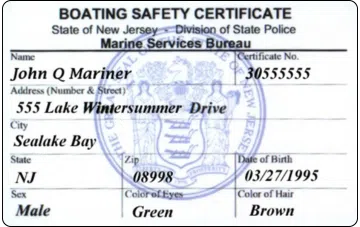
Once the exam is passed, students can receive their New Jersey Boating Safety Certificate, which is commonly referred to as a New Jersey boating license.
—
Step 1: Complete the Boating Safety Course
The first step is completing a New Jersey approved boating safety course. These courses teach the fundamentals of safe boat operation, including:
- Navigation rules and right of way
- Required safety equipment
- Boating laws and regulations
- Environmental responsibilities
- Emergency procedures
Many students complete the course online because it allows them to study at their own pace before scheduling the exam.
—
Step 2: Schedule a Proctored Boating Exam
After finishing the course material, students must schedule a proctored boating safety exam. A proctored exam means that the test is supervised by an approved testing administrator.
The proctor verifies the student’s identity and ensures that the exam is taken according to New Jersey boating education rules.
Proctored exams are typically offered through:
- Approved testing centers
- Community boating organizations
- Boating education providers
- Special exam events hosted throughout the state
—
What the Proctored Exam Covers
The exam tests the information covered in the boating safety course. Topics commonly include:
- Safe boat operation
- Navigation markers and buoys
- Personal watercraft laws
- Alcohol and boating laws
- Emergency procedures
The goal is to ensure that operators understand how to safely navigate New Jersey waterways before operating a boat or personal watercraft.
—
After Passing the Exam
Once you pass the proctored exam, you will receive your New Jersey Boating Safety Certificate. This certificate serves as proof that you completed the required boating education.
You must carry proof of certification while operating a motorized vessel or personal watercraft in New Jersey.
If you plan to operate a Jet Ski or other personal watercraft, this certificate satisfies the education requirement under New Jersey boating law.
—
How Long the Process Takes
The full process usually involves two steps:
- Completing the boating safety course (often a few hours depending on pace)
- Scheduling and passing the proctored exam
Many students complete the course online first, then attend a scheduled proctored exam session shortly afterward.
—
Bottom Line
To legally operate a motorized boat or personal watercraft in New Jersey, most operators must complete an approved boating safety course and pass a proctored exam. The supervised test ensures that students understand the laws and safety practices needed to operate responsibly on New Jersey waters.