
Take an Official State-Approved Boater Safety Course
Overview
Texas law requires specific safety equipment to be carried onboard when operating a vessel on public waters. These requirements are designed to ensure that boat operators can respond to emergencies, assist passengers, and remain visible to other vessels. This guide explains the equipment you must have on board in Texas, who it applies to, and the legal standards for each item.
Texas adopts the U.S. Coast Guard (USCG) safety equipment carriage requirements for recreational vessels operating on state waters. Boat operators are legally responsible for ensuring that the required safety equipment is present, in good working condition, and accessible.
Equipment requirements vary depending on the type of vessel, length, and propulsion (motorized vs non-motorized). The following summarizes the major categories.
All vessels must carry one USCG-approved wearable PFD (Type I, II, III, or V) for each person on board.
Additional rules that apply in Texas:
Children under 13 must wear a USCG-approved PFD while underway on vessels less than 26 feet in length (Texas Parks & Wildlife enforcement; aligns with USCG rule adopted by Texas)
Type V devices must be worn to be considered compliant
PFDs must be in serviceable condition, readily accessible, and appropriately sized
Throwable Device Requirement (Type IV):
Vessels 16 feet or longer (except canoes/kayaks) must carry one Type IV throwable PFD (e.g., cushion or ring buoy).
Read: Texas Life Jacket Laws
Texas follows the USCG distinction between inland and coastal waters:
Coastal waters (e.g., Gulf Coast, bays, coastal waterways):
VDS required at night for all vessels and day & night for certain vessel types depending on size and use.
Inland lakes and reservoirs:
VDS are not required by Texas, but are recommended for emergency signaling.
Exception categories (consistent with USCG rules):
Manually propelled vessels (canoe/kayak) on protected waters have no VDS carriage requirement at night unless operating on coastal waters.
Navigation lights must meet USCG COLREGS/INLAND lighting requirements and be displayed:
From sunset to sunrise
During periods of restricted visibility
Configuration varies by vessel length and propulsion. Running lights and anchor lights are the minimum for most motorized vessels; paddled/sail-only vessels have separate configurations defined by USCG rules.
All vessels must carry a sound-producing device capable of signaling intentions and warning of danger.
Whistle or horn is acceptable on most recreational vessels
Vessels ≥ 39.4 feet (12 meters) must also carry a bell in accordance with USCG rules
Fire extinguisher requirements apply to vessels with spaces where fuel vapors can accumulate.
A USCG-approved B-type portable extinguisher is required if any of the following apply:
Vessel has inboard engine
Vessel has permanently installed fuel tanks
Vessel has closed living spaces
Vessel has closed stowage compartments that may trap vapors
Ventilation is required on vessels equipped with gasoline engines in enclosed spaces. This includes:
Intake and exhaust ducts for natural ventilation, or
Powered exhaust blowers for mechanical ventilation
Ventilation reduces the risk of explosion from gasoline vapors.
All gasoline-powered engines installed on motorboats after April 25, 1940 must be equipped with an approved backfire flame arrestor (or equivalent air induction system) to prevent propane/air mixture ignition.
Texas enforces ECOS laws consistent with USCG:
Applies to vessels < 26 feet equipped with an ECOS
Must be worn by the operator when operating above displacement/headway speed
Wireless ECOS devices are acceptable if installed by manufacturer or approved vendor
This requirement applies to most modern outboard-powered runabouts, pontoons, and PWCs.
Most recreational powerboats less than 20 feet in length must display a capacity plate showing:
Maximum number of persons
Maximum weight
Maximum horsepower
Carrying passengers or load in excess of these limits is considered unsafe operation and may result in citation.
Cabin vessels, houseboats, and cruisers present elevated carbon monoxide (CO) risks near enclosed spaces and swim platforms. While Texas does not currently require CO detectors on recreational vessels, TPWD and USCG both warn operators to:
Avoid “station wagon effect” exhaust recirculation
Keep passengers off swim platforms while engines/generators are running
Texas Parks & Wildlife enforces safety equipment requirements primarily via adoption of USCG carriage rules, plus Texas-specific operator provisions such as:
Child PFD wear requirements
ECOS wear requirements
Boating While Intoxicated (BWI) enforcement
TPWD game wardens and USCG boarding officers may stop any vessel to verify equipment compliance. Failure to carry the required items can result in:
Citation/fines
Termination of voyage (ordered off the water)
Passenger removal in severe safety cases
Texas Parks & Wildlife publishes size- and vessel-specific carriage requirements:
https://tpwd.texas.gov/regulations/outdoor-annual/boating/equipment-and-requirements
Operators should verify requirements for:
PWCs
Sailboats
Outboard runabouts
Cabin cruisers
Houseboats
Manually propelled vessels
Recademics is a nationally recognized provider of outdoor recreation safety education, offering online certification courses for boating, hunter education, bowhunter education, off-highway vehicles (OHV/off-road), snowmobiles, and personal watercraft (PWC). Our courses are built around nationally established standards and regulatory frameworks, with alignment to NASBLA (boater education) and IHEA-USA (hunter and bowhunter education).
We currently have more than 26 state-approved courses issued directly by state agencies across the United States, including approvals in Texas, New York, Florida, California, Georgia, Alabama plus many more & with additional states pending. Every course is developed and maintained by subject-matter specialists, instructional designers, and state-reviewing authorities to ensure accuracy, compliance, and a high-quality learning experience.
Recademics focuses on clear instruction, accuracy, and straightforward pathways to certification for outdoor enthusiasts across multiple disciplines. Our goal is simple: make it easier to get certified, stay compliant, and enjoy the outdoors with confidence.
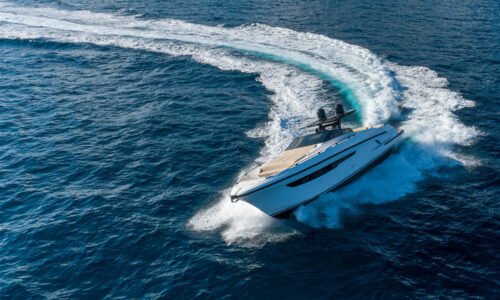
This is a FREE Boating course.