Minimum Age to Operate a Boat in Wisconsin
General Boating Age Requirements
Wisconsin law sets specific age thresholds for operating motorboats, with additional rules for PWCs. For traditional motorboats:
- Under 10 years old:
- May not operate any motorboat under any circumstances.
- Ages 10–11:
- May operate a motorboat only if they are accompanied by a parent, guardian, or designated adult who is at least 18 years old and is on board the boat.
- Ages 12–15:
- May operate a motorboat alone if they have successfully completed a Wisconsin DNR–approved boating safety course and hold a boating safety education certificate, or
- May operate a motorboat if they are accompanied on board by a parent, guardian, or designated adult at least 18 years old who meets the education/exemption requirements.
- Ages 16 and older:
- May operate a motorboat without on-board supervision, provided they comply with Wisconsin’s boating safety education requirement (see below).
- Non-motorized boats:
- There is no minimum age for operating a non-motorized boat (such as a canoe, kayak, rowboat, or paddleboard), but life jackets and active adult supervision are strongly recommended for children.
These rules apply on Wisconsin’s lakes, rivers, and other public waters where state boating laws are enforced.
Supervision and Adult-Onboard Requirements
For younger operators, Wisconsin relies heavily on adult supervision when a boating safety certificate is not yet held.
- Who must be on board?
- For 10–11-year-olds, a parent, guardian, or designated adult at least 18 years old must be on board whenever the child operates a motorboat.
- For 12–15-year-olds who have not completed a boating safety course, the same supervision rule applies: an 18+ adult must be on board.
- Definition of “adult” in Wisconsin:
- An adult for boating supervision is a person 18 years of age or older.
- If the adult was born on or after January 1, 1989, they must also hold a valid boating safety education certificate to operate or legally supervise operation of a motorboat.
- Boaters with a certificate (ages 12–15):
- If a 12–15-year-old has completed an approved course and holds a certificate, they may operate a motorboat without an adult on board, subject to all other boating laws and local regulations.
Boating License or Education Requirements
Does Wisconsin Require a Boating Safety Course?
Yes. Wisconsin uses a boating safety education certificate system rather than a traditional “license.” The key rule is based on the operator’s date of birth.
- Who must have a boating safety education certificate?
- Anyone born on or after January 1, 1989 must complete a Wisconsin DNR–approved boating safety course to operate a motorboat or PWC.
- For motorboats, this applies starting at age 12 when a child is first allowed to operate a boat without an adult on board.
- What the course covers:
- State boating laws, navigation rules, required equipment, accident reporting, safe speed and no-wake operation, and specific rules for PWCs and towing activities.
- Where to find a course:
- Wisconsin DNR lists approved classroom and online boating safety courses on its official website. Recademics can provide an approved online course option where available.
- Proof of completion:
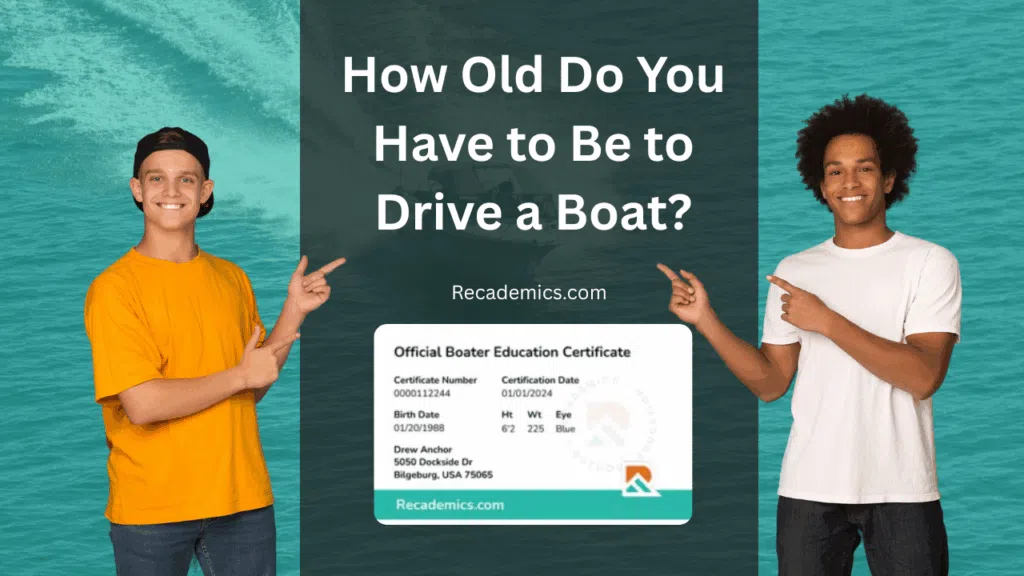
- After passing the course, you receive a boating safety education certificate (boater education card), which you must carry on board whenever you operate a motorboat or PWC, and show to law enforcement upon request.
Age Exceptions and Grandfather Clauses
Wisconsin recognizes a few important exceptions to the education requirement.
- Birthdate exemption:
- Boaters born before January 1, 1989 are generally not required to hold a boating safety education certificate to operate a motorboat or PWC in Wisconsin.
- Even if exempt, they are strongly encouraged to complete a course for safety.
- Nonresident boaters:
- Nonresidents may operate in Wisconsin if they hold a boating safety certificate from another state or country that meets nationally recognized standards and is accepted by Wisconsin DNR.
- Rental and temporary operation:
- Operators renting or chartering boats are still subject to the same age and education rules; some liveries may provide a brief orientation, but this does not replace the formal boating safety certificate requirement when it applies.
- Professional and official operators:
- Certain U.S. Coast Guard–licensed mariners and others operating vessels as part of official or commercial duties may be covered by different requirements, as outlined in state and federal regulations.
How Old Do You Have to Be to Drive a Jet Ski (PWC) in Wisconsin?
Minimum Age to Operate a PWC
Wisconsin sets separate, stricter rules for personal watercraft (PWCs), such as jet skis.
- Under 12 years old:
- May not operate a PWC under any circumstances.
- Ages 12–15:
- May operate a PWC only if they have successfully completed a Wisconsin DNR–approved boating safety course and are in possession of a valid boating safety education certificate.
- Adult supervision is not a substitute for the certificate for PWCs; the young operator must have the certificate themselves.
- Ages 16 and older:
- May operate a PWC if they have completed an approved boating safety course and hold a certificate, when required based on their birth date (born on or after January 1, 1989).
- Renting a PWC:
- PWCs may not be rented or leased to anyone under 16 years old.
- Rental operators are required to verify age and, when applicable, boating safety certification before allowing a customer to take a PWC out on the water.
- Horsepower considerations:
- Because PWCs are high-powered craft by design, they are treated as motorboats for education and age purposes; there is no “low-horsepower” exemption for PWC operation.
Penalties for Violating Age Laws
Wisconsin enforces its age and education rules through citations and other penalties.
- Operating without a boating safety certificate:
- Operators who are required to hold a boating safety education certificate but do not have one (or cannot produce it when requested) may receive a citation and fine.
- Courts may also require completion of an approved boating safety course as part of resolving the violation.
- Underage or improper operation:
- Allowing a child younger than the legal minimum age to operate a motorboat or PWC can result in penalties for both the operator and the adult responsible for the vessel.
- Renting or leasing a PWC to someone under the legal rental age can result in enforcement action against the rental business or owner.
- Serious or repeated violations:
- Reckless operation, boating under the influence (BUI), and other severe offenses carry higher fines, potential jail time, and possible suspension of boating privileges.
How to Get Certified to Drive a Boat in Wisconsin
Steps to Getting Your Boating License
In Wisconsin, your “boating license” is your boating safety education certificate. Here’s how to earn it:
- 1. Enroll in a Wisconsin-approved boating safety course.
Choose an in-person or online course that is approved by the Wisconsin DNR and meets national (NASBLA) standards. Recademics can provide an online course option where approved by the state. - 2. Study Wisconsin-specific boating rules.
Learn about navigation rules, required safety equipment, speed and no-wake regulations, life jacket requirements, PWC-specific rules, and age and supervision laws that apply on Wisconsin waters. - 3. Pass the final exam.
At the end of the course, you must pass a written or online exam demonstrating your understanding of safe boating practices and Wisconsin regulations. - 4. Receive your boating safety education certificate.
Once you pass, you’ll receive a boater education card/certificate that shows you’ve met Wisconsin’s boating safety education requirement. - 5. Carry proof of certification while operating.
Whenever you operate a motorboat or PWC and are subject to the education requirement, you must carry your certificate and present it to law enforcement if requested.
Boating Safety Tips for Young Operators
- Always wear a life jacket.
Everyone on board should wear a properly fitted, U.S. Coast Guard–approved life jacket, especially children and teens. Many accidents involve people who were not wearing life jackets when they entered the water. - Never operate without required adult supervision.
If you are under the age where Wisconsin law requires an adult on board, don’t treat that requirement as optional. An experienced adult can help you handle emergencies and navigate busy waterways. - Learn navigation rules and right-of-way basics.
Understanding who must give way, how to read buoys and markers, and how to maintain a proper lookout greatly reduces the risk of collisions. - Start with smaller boats and calm conditions.
Young operators should begin on calmer waters with smaller, lower-powered boats before moving up to larger craft or busy lakes and rivers. - Take your boating safety course early.
Completing a boating safety course as soon as you are eligible prepares you to operate legally and safely the moment you reach the minimum operating age. - Stay sober and alert.
Alcohol and drugs impair judgment, reaction time, and balance. Boating under the influence is illegal in Wisconsin and greatly increases the risk of serious accidents.
Summary
In Wisconsin, the legal age to drive a boat depends on your age, the type of vessel, and whether you have completed an approved boating safety course:
- Under 10: May not operate any motorboat.
- Ages 10–11: May operate a motorboat only with a parent, guardian, or designated adult (18+) on board.
- Ages 12–15: May operate a motorboat alone with a valid boating safety education certificate, or with an 18+ supervising adult on board.
- Ages 16 and older: May operate a motorboat if they meet Wisconsin’s boating safety education requirement.
- PWCs (jet skis):
- Under 12: May not operate a PWC.
- Ages 12–15: May operate a PWC only with a valid boating safety certificate.
- Ages 16+: Must have a boating safety certificate if born on or after January 1, 1989; PWCs may not be rented to anyone under 16.
- Boating education: Anyone born on or after January 1, 1989 must complete a Wisconsin-approved boating safety course to operate a motorboat or PWC.
To meet these requirements and build strong safety skills on the water, boaters in Wisconsin should complete an official boating safety course and always carry their certificate when operating. Recademics, as an approved boating-education provider, can help you complete your course, understand Wisconsin’s boating laws, and enjoy the state’s waters safely and responsibly.