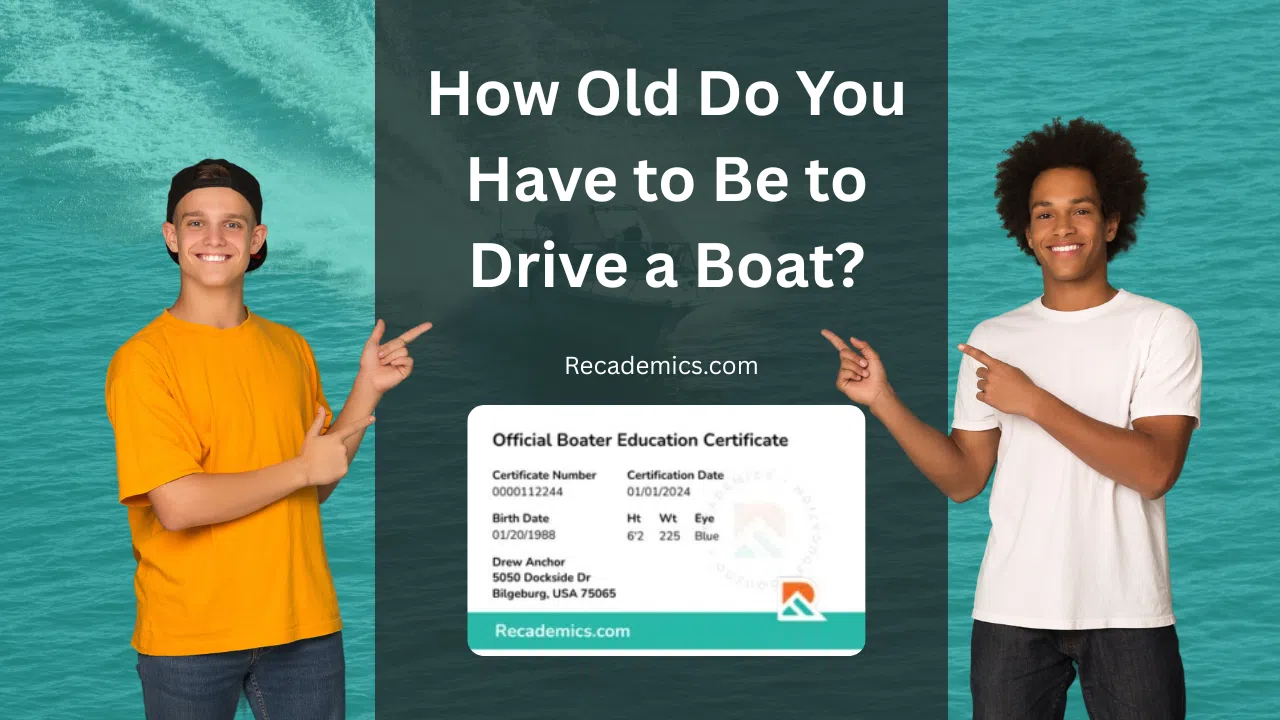
Minimum Age to Operate a Boat in New Hampshire
General Boating Age Requirements
New Hampshire’s age rules depend mainly on engine horsepower and whether the vessel is a ski craft/PWC:
- Boats with 25 hp or less
- May be operated by a person of any age.
- No Safe Boater Education Certificate is required for these low-horsepower boats.
- Boats with more than 25 hp (not ski craft)
- Under 16: May operate only if accompanied by an adult who is at least 18 and holds a valid Safe Boater Education Certificate.
- Age 16 and older: May operate only if they have a valid Safe Boater Education Certificate.
- Non-motorized craft (canoes, kayaks, paddleboards, rowing shells)
- No Safe Boater Education Certificate is required.
These rules mean that the practical “minimum age” to operate a larger powerboat independently in New Hampshire is 16, with a boating education certificate.
Supervision and Adult-Onboard Requirements
New Hampshire law builds in specific supervision rules for minors on more powerful boats:
- Boaters under 16 operating a boat over 25 hp (not ski craft)
- Must be accompanied by a person who:
- Is at least 18 years old, and
- Holds a valid New Hampshire Safe Boater Education Certificate.
- The accompanying adult is legally responsible for any injury or damage caused during operation.
- Boaters under 16 on boats 25 hp or less
- May operate without a certificate and without a specific adult-onboard requirement, although adult supervision is strongly recommended.
- Definition of “adult”
- For these purposes, an “adult” is a person who is at least 18 years of age and holds a valid Safe Boater Education Certificate when supervision is required.
Even when the law does not strictly require it, the New Hampshire Marine Patrol and safety organizations recommend that younger or inexperienced boaters operate with a knowledgeable adult on board, especially on busy or unfamiliar waters.
Boating License or Education Requirements
Does New Hampshire Require a Boating Safety Course?
Yes. New Hampshire has a mandatory boating education law for operators of more powerful boats:
- Who needs a certificate?
- Everyone 16 years of age or older who operates a motorboat with a motor of more than 25 horsepower on New Hampshire waters must have a Safe Boater Education Certificate.
- Where the law applies
- All public waters in New Hampshire, including popular lakes and rivers.
- What the certificate does
- Serves as proof that you have successfully completed a boating safety course approved by the New Hampshire Marine Patrol (or an accepted equivalent from another state or organization).
- Must be carried on board any time you operate a boat that requires certification.
- How to find a course
- Classroom and online options are listed through the New Hampshire Marine Patrol’s boating education pages (often reached via boatingeducation.nh.gov), as well as approved providers such as Recademics.
New Hampshire’s education requirement applies regardless of date of birth—if you are 16 or older and operating a boat over 25 hp, you must have a boating education certificate.
Age Exceptions and Grandfather Clauses
Instead of true “grandfather” clauses based on birth date, New Hampshire law creates exceptions based on boat type, horsepower, and supervision:
- Boats 25 hp or less
- No Safe Boater Education Certificate is required, and there is no fixed minimum operating age in state law.
- Boaters under 16 on boats over 25 hp
- May operate only when accompanied by an adult (18+) who holds a Safe Boater Education Certificate; in practice, the adult’s certification covers the minor’s operation.
- Commercial and special licenses
- Certain operators with a valid U.S. Coast Guard license or a state-issued commercial boating license may use that license instead of a recreational Safe Boater Education Certificate.
- New Hampshire accepts some out-of-state boating safety certificates that are NASBLA-approved.
- Non-motorized craft
- Canoes, kayaks, paddleboards, sailboards, and other unpowered craft do not trigger the Safe Boater Education requirement.
Older operators do not receive a blanket exemption based solely on their date of birth; the key questions are vessel horsepower, age 16+, and whether they hold an accepted certificate or license.
How Old Do You Have to Be to Drive a Jet Ski (PWC) in New Hampshire
Minimum Age to Operate a PWC
New Hampshire treats most personal watercraft (PWCs) and “ski craft” as higher-risk vessels and sets stricter age rules:
- Personal watercraft (PWC), including most jet skis
- No one under 16 years of age may operate a PWC in New Hampshire.
- Operators who are 16 or older must hold a valid Safe Boater Education Certificate to operate legally.
- Ski craft (a special New Hampshire category)
- Defined as a motorized vessel that is:
- Less than 13 feet in length,
- Capable of speeds over 20 mph, and
- Designed to carry no more than an operator and one passenger.
- Persons less than 16 years of age may not operate a ski craft.
- A ski craft may be operated only by persons 16 or older who also have a valid Safe Boater Education Certificate.
- Life jacket requirements
- All PWC and ski craft operators and passengers must wear a U.S. Coast Guard–approved life jacket whenever underway.
Because PWCs and ski craft are almost always powered by engines well above 25 hp, PWC operators in New Hampshire should assume that both the age 16 minimum and the boating education requirement apply.
Penalties for Violating Age Laws
Operating a motorboat or PWC in New Hampshire without meeting age and education requirements can lead to enforcement actions:
- Operating without a required Safe Boater Education Certificate
- Failing to possess and present a required certificate is a violation of New Hampshire law.
- Penalties include a $50 fine for a first offense and up to $250 for subsequent offenses, as outlined in RSA 270-D:11.
- Underage operation of a PWC or ski craft
- Boaters under 16 operating a PWC or ski craft, or operating a boat over 25 hp without the required supervision, may be cited for violating age and operator restrictions.
- Marine Patrol officers can order the vessel back to shore and may restrict the underage operator from further operation until a qualified adult is in control.
- More serious violations
- Operating under the influence (BUI) carries significantly higher penalties, including loss of boating privileges and possible loss of driving privileges for motor vehicles.
Marine Patrol officers routinely check for compliance with age rules, life jacket use, speed limits, and boating education card requirements on New Hampshire’s lakes and rivers.
How to Get Certified to Drive a Boat in New Hampshire
Steps to Getting Your Boating License
If you are 16 or older and plan to operate a motorboat over 25 hp or any PWC in New Hampshire, follow these steps:
- Confirm you need a Safe Boater Education Certificate.
If you will operate a boat with more than 25 horsepower or a PWC and you are 16 or older, you must complete an approved boating safety course and hold a certificate. - Choose an approved course provider.
Select a course approved by the New Hampshire Marine Patrol. Options typically include:- In-person classroom courses held around the state.
- Approved online courses offered by providers such as Recademics.
- Complete all course modules.
Study topics like navigation rules, New Hampshire-specific laws (including speed and distance rules), required safety equipment, emergency procedures, and environmental considerations. - Pass the final exam.
At the end of the course, you’ll take a proctored or online exam to demonstrate your understanding of safe boat operation and state regulations. - Receive your Safe Boater Education Certificate.
Once you pass, you’ll be issued a Safe Boater Education Certificate or “boating card” that is recognized under New Hampshire law. - Carry the certificate whenever you operate.
State law requires you to have the certificate on board (physical or approved electronic copy) and show it to Marine Patrol officers upon request whenever you operate a boat that requires it.
Completing your course through an approved provider like Recademics ensures that your training meets New Hampshire’s legal standards and prepares you for safe boating on the state’s waters.
Boating Safety Tips for Young Operators
Whether you are a new teen boater or a parent supervising a young operator, these safety tips are especially important in New Hampshire:
- Always wear a life jacket.
- Every person on board should wear a properly fitted, U.S. Coast Guard–approved life jacket, and it is especially critical for young or inexperienced boaters.
- Never operate without adult supervision if required by law.
- If you are under 16 and operating a boat over 25 hp, you must have a qualified adult on board—treat that rule as a hard line, not a suggestion.
- Learn navigation rules and right-of-way basics.
- Understand how to pass, overtake, and cross other boats safely, and know New Hampshire’s 150-foot headway speed rule near shore, swimmers, and other boats.
- Take your boating safety course early.
- Completing a course before the busy season gives you time to absorb the material and practice with a certified adult.
- Match your speed to conditions.
- Slow down in crowded areas, in limited visibility, or when you are unsure of the water depth or hazards.
- Use the engine cut-off switch (kill switch).
- On PWCs and many small boats, wear the lanyard so the engine shuts off if you fall overboard.
- Stay sober at the helm.
- Alcohol and drugs greatly increase the risk of accidents and carry serious legal penalties for boat operators in New Hampshire.
Summary
In New Hampshire, there is no fixed minimum age to operate very small motorboats with engines of 25 hp or less. For more powerful boats, however, the rules are stricter: everyone 16 and older must have a Safe Boater Education Certificate to operate a motorboat over 25 horsepower, and boaters under 16 may only operate those boats while accompanied by a certified adult who is at least 18. Personal watercraft and ski craft require operators to be at least 16 and certified.
Violating these age and education requirements can result in fines and restrictions on your ability to operate a boat. To meet the law and build strong safety habits, New Hampshire boaters should complete their official boating education through a state-approved provider such as Recademics, carry their Safe Boater Education Certificate on board, and follow core safety practices every time they head out on the water.