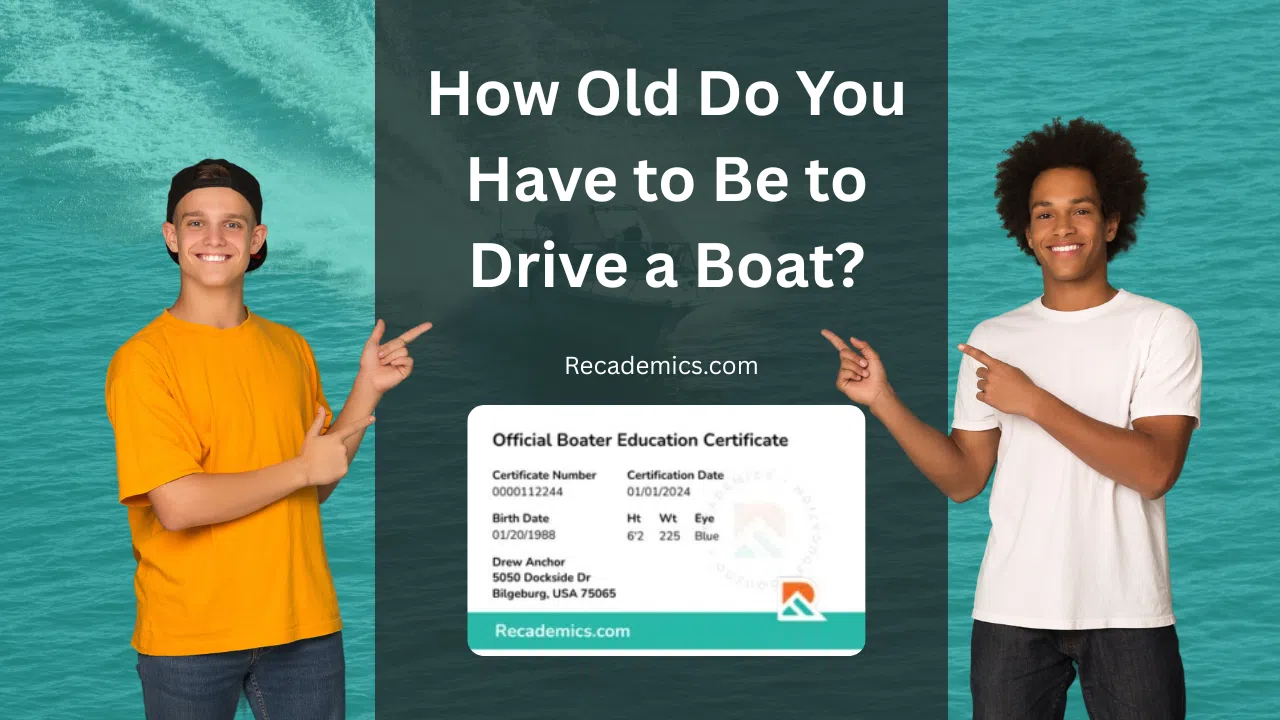
Minimum Age to Operate a Boat in Missouri
General Boating Age Requirements
Missouri law sets a clear minimum age standard for operating motorboats and other motorized vessels on state waters:
- Under 14 years old: A person younger than 14 may not operate any motorboat or vessel on Missouri waters unless they are under the direct on-board supervision of a parent, guardian, or another person who is at least 16 years of age, or the motorboat is moored (not underway).
- 14 years and older: A person 14 or older may operate a motorboat or vessel without on-board supervision, provided they meet boater education requirements if they were born after January 1, 1984.
These rules apply broadly to motorized vessels on Missouri waters. Non-motorized craft such as canoes, kayaks, or small sailboats are not subject to the same minimum-age statute, but safe supervision is still strongly recommended for young operators.
While the basic age rule is the same for motorboats and other powered vessels, PWCs (jet skis and similar craft) have additional, more specific restrictions described below.
Supervision and Adult-Onboard Requirements
For younger operators, supervision is a key part of Missouri boating law:
- Direct on-board supervision: For operators under 14, an adult must be physically on board the vessel and able to take immediate control. Supervision from another boat or from shore does not meet this requirement.
- Who qualifies as an “adult” for supervision: Missouri law allows a parent, guardian, or another person at least 16 years old to provide direct on-board supervision of a child under 14 who is operating a motorboat or vessel.
- Owner and parent responsibility: It is unlawful for a vessel owner or a parent/guardian to knowingly permit a child under 14 to operate a motorboat or PWC in violation of these age and supervision requirements.
In practice, this means that while older teens can operate independently (with the required education card, if applicable), younger boaters must always have a qualified supervising person on board and actively overseeing the boat’s operation.
Boating License or Education Requirements
Does Missouri Require a Boating Safety Course?
Missouri does not issue a traditional “boating license” like a driver’s license, but it does require many operators to hold a boating safety identification card. Under Missouri law:
- Who must have a card: Anyone born after January 1, 1984 who operates a vessel on Missouri’s lakes must possess, on the vessel, a boating safety identification card issued by the Missouri State Highway Patrol Water Patrol Division or its authorized agent.
- How to qualify: To receive this card, the operator must either:
- Successfully complete a NASBLA-approved boating safety course certified by the Water Patrol Division, or
- Pass an equivalency examination prepared and administered (or overseen) by the Water Patrol Division, or
- Hold a valid U.S. Coast Guard master’s, mate’s, or operator’s license.
- Where to find courses: Approved courses are listed by the Missouri State Highway Patrol’s Water Patrol Division and may be offered in person or online through approved providers.
The boating safety identification card is generally valid for life unless it is invalidated under Missouri law.
Age Exceptions and Grandfather Clauses
Missouri’s boating safety identification card requirement includes several important exceptions:
- Born on or before January 1, 1984: Individuals in this group are not required by statute to hold a Missouri boating safety identification card, though completing a boating safety course is still strongly recommended for safe operation.
- Private lakes and ponds: The card requirement applies to operation on the lakes of the state. It does not apply to individuals operating vessels only on private lakes or ponds that are not classified as waters of the state.
- Existing NASBLA-approved education: A person who has previously completed a NASBLA-approved boating safety course or holds a NASBLA-approved certificate from another state may be exempt from retaking a Missouri-specific course.
- Coast Guard–licensed mariners: Operators licensed by the U.S. Coast Guard to serve as master of a vessel are exempt from the card requirement.
- Temporary cards for rentals: A person who meets Missouri’s minimum age requirements can obtain a temporary boating safety identification card when renting or test-driving a vessel. This temporary card is valid for up to seven days and requires reviewing Missouri’s boating laws and paying a fee.
Even when the law does not require formal boater education, taking an approved course is a practical way to learn navigation rules, emergency procedures, and local regulations before operating on Missouri waters.
How Old Do You Have to Be to Drive a Jet Ski (PWC) in Missouri?
Minimum Age to Operate a PWC
Missouri sets specific rules for personal watercraft (PWCs), such as jet skis and similar vessels:
- Under 14 years old: A person under 14 may not operate a PWC on Missouri waters unless a person at least 16 years of age is aboard the PWC with them.
- 14 years and older: A person 14 or older may operate a PWC without another person on board, provided they comply with Missouri’s boating safety identification card requirement if they were born after January 1, 1984.
- Education requirement: Because a PWC is a motorized vessel, anyone born after January 1, 1984 who operates a PWC on a Missouri lake must hold a valid boating safety identification card or recognized equivalent, just as for motorboats.
There are no separate horsepower-based age thresholds written into Missouri’s general statutes for PWCs. However, all PWC operators must meet the minimum age and education requirements and follow equipment and safe-operation rules, including use of a U.S. Coast Guard–approved life jacket.
Penalties for Violating Age Laws
Operating a boat or PWC in violation of Missouri’s age and supervision requirements can lead to legal consequences for both the operator and the vessel’s owner or responsible adult:
- Class B misdemeanor: Violations of boating provisions in Chapter 306 for which no specific penalty is otherwise provided, including minimum age provisions, are generally treated as a class B misdemeanor.
- Owner and parent liability: A boat or PWC owner, or a child’s parent/guardian, may be cited if they knowingly allow a child to operate in violation of age or supervision rules.
- Enforcement actions: Depending on the circumstances, especially if unsafe operation or an accident is involved, enforcement may include citations, fines, and potential additional charges under other safety or negligence statutes.
Specific fine amounts and court outcomes can vary by case and jurisdiction, but boaters should treat Missouri’s age and safety rules as mandatory, not optional.
How to Get Certified to Drive a Boat in Missouri
Steps to Getting Your Boating License
If you were born after January 1, 1984 and plan to operate a motorboat or PWC on Missouri lakes, you will need a Missouri boating safety identification card. The general process is:
- Step 1: Take an approved boating safety course.
- Choose a NASBLA-approved course certified by the Missouri State Highway Patrol Water Patrol Division. Courses may be offered in the classroom or online by approved providers, or by organizations such as the U.S. Coast Guard Auxiliary or U.S. Power Squadrons, if approved by the state.
- Step 2: Pass the final exam or equivalency test.
- Successfully complete the course exam or pass the state’s equivalency exam, which is designed to be at least as rigorous as the course exam.
- Step 3: Receive your boating safety identification card.
- After proof of completion, the Water Patrol Division or its agent will issue a permanent boating safety identification card that remains valid for life unless revoked.
- Step 4: Carry proof while operating.
- When you operate a motorized vessel on a Missouri lake, you must carry the boating safety identification card on board, and it is also wise to carry a photo ID so officers can confirm your identity during inspections.
For short-term rentals, a qualifying operator may obtain a temporary boating safety identification card after reviewing Missouri’s boating laws and paying the applicable fee, which is typically handled through the rental business.
Boating Safety Tips for Young Operators
- Always wear a life jacket. Missouri law requires children under 7 on board a watercraft on state waters to wear a U.S. Coast Guard–approved personal flotation device, except when inside a fully enclosed cabin. This is a smart safety practice for all ages, not just young children.
- Never operate without required supervision. If you are under 14, you must have a qualified supervising person on board according to Missouri’s age rules. Even older teens benefit from having an experienced adult on board, especially in busy or unfamiliar waters.
- Learn the navigation rules. Boating has “rules of the road,” including right-of-way, speed, distance-from-dock, and no-wake requirements. Completing a boating safety course is one of the best ways to learn these rules and apply them on Missouri’s lakes and rivers.
- Operate at a safe speed. High speed in congested areas, near docks, or around swimmers is dangerous and may qualify as unsafe or reckless operation—especially on PWCs.
- Avoid alcohol and drugs. Boating under the influence is illegal and significantly increases the risk of accidents. Designated sober operators are essential for safe outings.
- Check equipment before departure. Confirm that you have life jackets for everyone, a sound-producing device (such as a whistle or horn), proper navigation lights, and other required safety gear for your vessel’s size and type.
Summary
In Missouri, the minimum age to operate a motorboat or motorized vessel alone is generally 14 years old. Children under 14 may operate only under the direct on-board supervision of a parent, guardian, or another person at least 16 years old. For PWCs, no one under 14 may operate alone, but a child under 14 can operate if a person at least 16 is on board the PWC.
Most operators born after January 1, 1984 who drive a motorboat or PWC on Missouri lakes must also hold a boating safety identification card, obtained by passing a NASBLA-approved boating safety course or equivalency exam. While some older operators and specific situations are exempt, boating education is strongly encouraged for everyone on the water.
By understanding Missouri’s minimum age rules, supervision requirements, and education standards—and by completing official boating safety training through an approved provider—you help ensure safer, more enjoyable days on Missouri’s lakes and rivers for yourself and everyone around you.