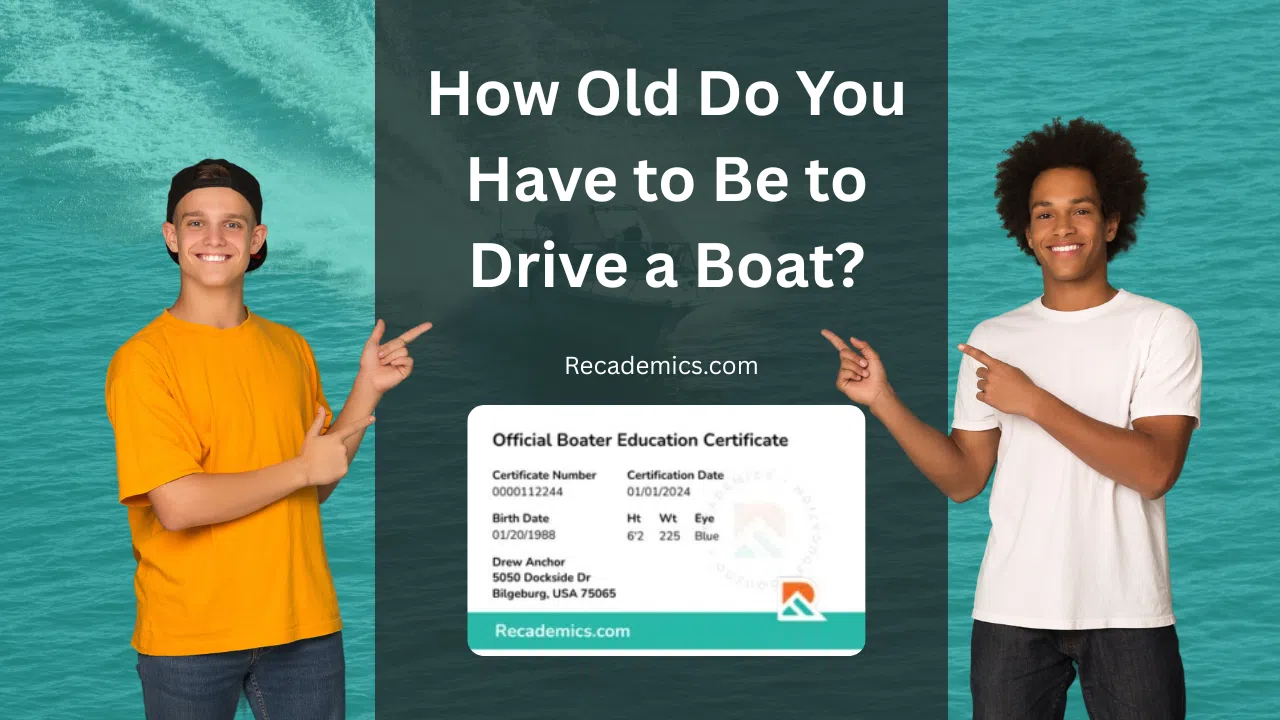
Minimum Age to Operate a Boat in Minnesota
General Boating Age Requirements
Minnesota law separates “young operators” (under 12) from “adult operators” (12 and older within certain birth years) and also uses horsepower cutoffs for motorboats that are not PWCs. The key rules are:
- Any age – low-powered motorboats
A person of any age may operate a motorboat that is not a personal watercraft and is powered by a motor of 25 horsepower (hp) or less, without a watercraft operator’s permit and without an accompanying operator. - Young operators – under 12 years old
Minnesota law defines a “young operator” as someone younger than 12. A young operator:- May not operate a personal watercraft (PWC) at all.
- May not operate any motorboat with a factory-rated motor of more than 75 hp.
- May operate a non-PWC motorboat under 75 hp only if an accompanying operator is in the boat.
- Adult operators – 12 years and older
An “adult operator” for boating law purposes is generally someone who:- Is at least 12 years old, and
- Is within the birth-year ranges covered by Minnesota’s new boater education law (phased in between July 1, 2025 and July 1, 2028).
An adult operator may not operate a motorboat (including a PWC) unless:- They have a valid watercraft operator’s permit, or
- They are an exempt operator (for example, born before the applicable phase-in date), or
- An accompanying operator is in the motorboat or on the PWC.
So, while very young children can operate only smaller boats under tight conditions, older youth and adults must either be properly certified or supervised, especially when operating more powerful boats.
Supervision and Adult-Onboard Requirements
Minnesota uses the term “accompanying operator” for the supervising adult. Under current law, an accompanying operator must:
- Be at least 21 years old.
- Be in the same motorboat or on the same PWC as the person they are supervising.
- Be within immediate reach of the controls so they can quickly take over if needed.
- Hold a valid watercraft operator’s permit or be an exempt operator.
For young operators under 12, a qualifying accompanying operator must be on board any time they operate a non-PWC motorboat under 75 hp. For adult operators who don’t yet have a permit, an accompanying operator can satisfy the legal requirement until they complete their boating safety course.
Boating License or Education Requirements
Does Minnesota Require a Boating Safety Course?
Yes. Minnesota’s updated law requires many operators age 12 and older to hold a Minnesota watercraft operator’s permit, which you earn by completing an approved boater education course and exam.
Key points include:
- The permit requirement is phased in by birth year. Starting July 1, 2025, it applies first to people born on or after July 1, 2004, and then gradually to older birth years through 2028.
- Within each phase-in group, an operator age 12 or older may not operate a motorboat (including a PWC) unless they:
- Hold a valid watercraft operator’s permit, or
- Are exempt under the law, or
- Have an accompanying operator age 21+ with a permit or exemption on board.
- The permit is recognized statewide and is designed to ensure operators understand Minnesota’s navigation rules, safety equipment requirements, and local regulations.
Boaters can find current course options and rules on the Minnesota Department of Natural Resources (DNR) and state licensing websites.
Age Exceptions and Grandfather Clauses
The phase-in of the permit requirement creates several “grandfathered” groups:
- Operators who are older than the current phase-in birth year (for example, born before July 1, 2004 during the first phase) are generally treated as exempt operators and may operate without a permit, provided they follow all other boating laws.
- As the law expands from 2025 through 2028, more adults will fall under the permit requirement based on their birth year, narrowing the exempt group over time.
- Rental operations must follow additional rules. For example, a rental business may rent certain motorized watercraft only to someone who is at least 18 and who has either a valid permit or qualifies as exempt.
Because the details change over several years, Minnesota boaters should always verify which birth years are currently required to hold a permit in the season they plan to operate.
How Old Do You Have to Be to Drive a Jet Ski (PWC) in Minnesota?
Minimum Age to Operate a PWC
Minnesota treats personal watercraft (PWCs)—such as Jet Skis and WaveRunners—as motorboats with special restrictions:
- Under 12 years old: A young operator may not operate a PWC at all, even with an adult on board.
- 12 years and older (adult operators):
- Must have a valid watercraft operator’s permit, or
- Be an exempt operator, or
- Have an accompanying operator (21+, with permit or exempt) on the PWC or in immediate reach on the same craft.
There is no separate horsepower table for PWCs in the statute; instead, PWCs are covered under the same “young operator” and “adult operator” framework as other motorboats, with an absolute ban on PWC operation by anyone under 12.
Penalties for Violating Age Laws
Violating Minnesota’s age and permit rules can result in criminal and administrative consequences:
- Unless a specific penalty is listed, any violation of Minnesota’s watercraft operation statutes is a misdemeanor.
- If an operator age 13–17 is found in juvenile court to have committed certain serious offenses—such as operating while impaired or operating in a grossly negligent manner—their watercraft operator’s permit must be revoked for a period set by law.
- After revocation, a youth may receive a new permit only after at least one year and completing an approved watercraft safety course again.
- Owners or adults who knowingly allow a boat to be operated contrary to these rules can also be cited.
Following the age limits, permit requirements, and supervision rules helps young operators avoid fines, court involvement, and loss of boating privileges.
How to Get Certified to Drive a Boat in Minnesota
Steps to Getting Your Boating License
Minnesota’s “boating license” is the watercraft operator’s permit. Here’s how most youth and adults in the covered birth-year groups can earn it:
- 1. Take an approved boating safety course.
Enroll in a Minnesota-approved boater education course (often offered online or in person). Courses must meet Minnesota DNR and national (NASBLA) standards to qualify for the permit. - 2. Complete all lessons.
The course covers:- Boat parts and basic operation
- Required safety equipment and life jacket rules
- Minnesota navigation rules and local regulations
- Special rules for PWCs and young operators
- Emergency procedures and accident reporting
- 3. Pass the final exam.
At the end, you’ll take an exam to show you understand safe operation and state-specific laws. A passing score is required to qualify for the permit. - 4. Receive your watercraft operator’s permit.
After passing, you’ll receive official proof of certification. This is your Minnesota watercraft operator’s permit. - 5. Carry proof while operating.
If you’re in a group that must be certified, you must have your permit with you whenever you operate a motorboat or PWC and show it to law enforcement on request.
Some rental businesses may also offer brief safety reviews or summary tests, but these do not replace the full permit requirement unless they are part of a state-approved program.
Boating Safety Tips for Young Operators
- Always wear a life jacket.
Everyone on board—especially kids and teens—should wear a properly fitted, U.S. Coast Guard–approved life jacket anytime the boat is underway. - Never operate without required adult supervision.
If Minnesota law requires an accompanying operator (for example, you’re under 12 in a motorboat under 75 hp or you’re 12+ without a permit), make sure that adult is on board, qualified, and within immediate reach of the controls. - Learn navigation rules and right-of-way basics.
Understanding buoys, markers, no-wake zones, and who must yield in crossing and overtaking situations greatly reduces the risk of collisions. - Take your boating safety course early.
Youth who complete their course as soon as they are eligible quickly gain confidence and are ready for the permit requirement as it phases in by birth year. - Operate at safe speeds near shore and traffic.
Slow-no-wake speeds near docks, swimmers, and congested areas are both safer and often required by local rules. - Stay sober and alert.
Operating under the influence of alcohol or drugs is illegal and significantly increases the chance of a serious crash.
Summary
In Minnesota, how old you have to be to drive a boat depends on your age, the boat’s horsepower, and whether it’s a PWC. Anyone of any age may operate a non-PWC motorboat with 25 hp or less. Young operators under 12 may operate only non-PWC motorboats under 75 hp with a qualified adult (21+ with permit or exempt) on board, and they may not operate PWCs or boats over 75 hp at all. Most operators age 12 and older must either hold a watercraft operator’s permit, qualify as exempt, or have an accompanying operator on board.
By understanding these age and education rules, completing an approved boating safety course, and following key safety practices, Minnesota boaters—especially teens and new operators—can enjoy the state’s lakes and rivers legally and responsibly. Recademics supports future boaters by helping them prepare for their official Minnesota boating education so they can earn their permit and operate with confidence.