Minimum Age to Operate a Boat in Michigan
General Boating Age Requirements
Michigan law separates motorboat operation rules by age group and engine size. These rules apply to motorboats on Michigan waters and do not include non-motorized craft such as canoes, kayaks, or rowboats.
- Under 12 years old
- May operate a boat powered by a motor of no more than 6 horsepower (hp) without any additional restrictions.
- May operate a boat powered by a motor of more than 6 hp but no more than 35 hp only if:
- They have been issued a boating safety certificate and have it on board, and
- They are directly supervised on board by someone at least 16 years old.
- May not operate a boat powered by a motor of more than 35 hp under any circumstances.
- 12 to 15 years old
- May operate a boat powered by a motor of no more than 6 hp without restrictions.
- May operate a boat powered by a motor of more than 6 hp only if:
- They have passed an approved boating safety course and have their boating safety certificate on board, or
- They are accompanied on board by a person at least 16 years old.
- 16 years and older
- Those born on or after July 1, 1996 may operate a motorboat of more than 6 hp only if they have been issued a boating safety certificate and carry it on board.
- Those born before July 1, 1996 may operate a motorboat without any education requirement.
These age and horsepower thresholds form the core answer to “how old you have to be” to drive a boat in Michigan—very young boaters are limited to small motors, while older youth and adults must meet education requirements to operate more powerful boats.
Supervision and Adult-Onboard Requirements
Michigan law also defines when a young operator must have an older person on board. The supervision rules differ slightly between standard motorboats and PWCs.
- Motorboats (excluding PWCs)
- Operators under 12 running a motorboat between more than 6 hp and up to 35 hp must:
- Hold a boating safety certificate, and
- Be directly supervised on board by a person who is at least 16 years old.
- Operators 12–15 may operate higher-horsepower boats either with a boating safety certificate or by having a person at least 16 years old on board with them.
- Definition of “adult” for supervision
- For motorboats, Michigan uses age 16+ as the supervision benchmark.
- For personal watercraft (PWCs), a supervising adult must generally be at least 21 years old and be the parent, legal guardian, or a person designated by the parent or guardian (details below in the PWC section).
Boating License or Education Requirements
Does Michigan Require a Boating Safety Course?
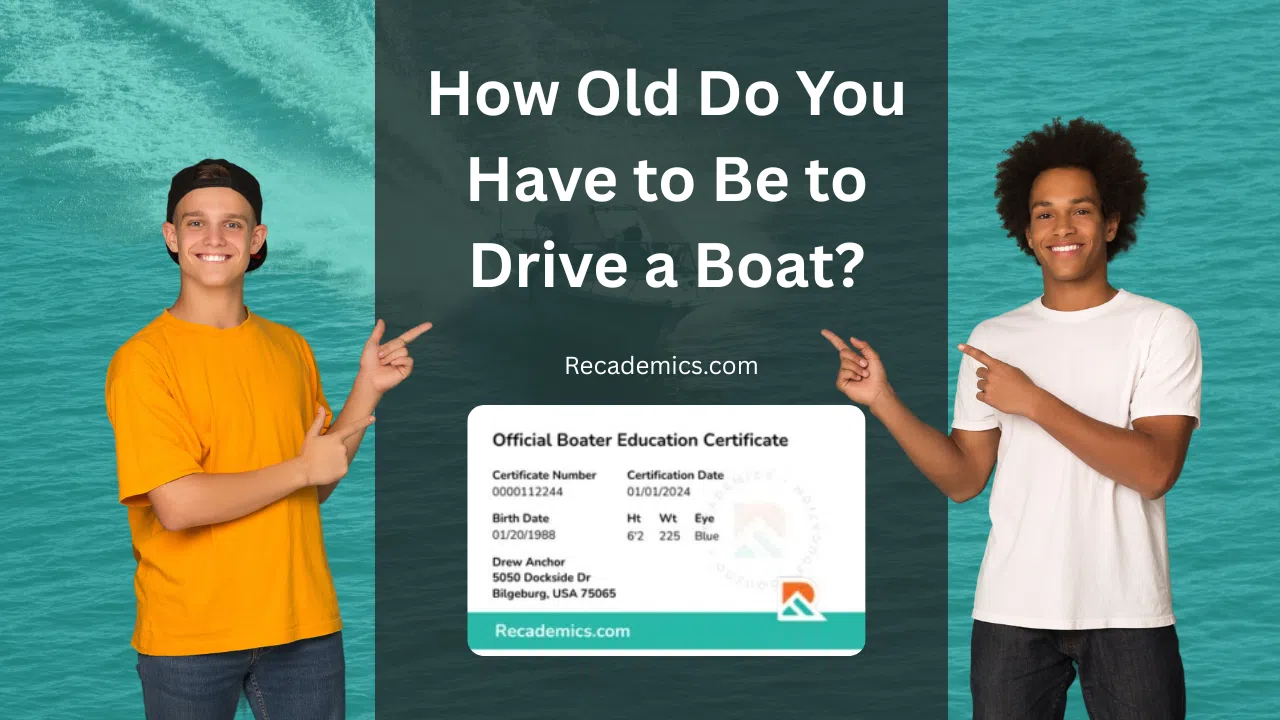
Michigan does not issue a traditional “boating license,” but it does require many operators to carry a boating safety certificate (sometimes called a boater education card).
- Motorized boats (general rule)
- Any motorized boat operator born after June 30, 1996 must complete an approved boater safety course and carry a boating safety certificate while operating a motorboat.
- Personal watercraft (PWC)
- All PWC operators born after December 31, 1978 must have a boating safety certificate to operate legally.
Boater education courses are offered in classroom and online formats through the Michigan DNR and other approved providers. After completing the course and passing the exam, you’ll receive a certificate that must be carried whenever you’re operating a motorized boat or PWC (if you are in the required age group).
Age Exceptions and Grandfather Clauses
Michigan’s boating laws include “grandfathered” groups that are exempt from the education requirement, though they must still follow all other boating rules.
- For motorboats, those born before July 1, 1996 may operate without a boating safety certificate.
- For PWCs, those born on or before December 31, 1978 may operate without a boating safety certificate.
Even if you are exempt, completing a safety course is still highly recommended—especially if you’re supervising younger boaters or operating in busy areas.
How Old Do You Have to Be to Drive a Jet Ski (PWC) in Michigan?
Minimum Age to Operate a PWC
Michigan sets clear and strict minimum ages for operating a personal watercraft, such as a Jet Ski, Sea-Doo, or WaveRunner.
- Under 14 years old
- Not allowed to operate a PWC under any circumstances.
- 14–15 years old – May operate a PWC only if they:
- Hold a valid boating safety certificate, and
- Are either:
- Accompanied on board by a parent, legal guardian, or a designated person at least 21 years old, or
- Operating the PWC within 100 feet of a parent, legal guardian, or designated 21+ adult who is also operating a PWC.
- 16 years and older (born after Dec. 31, 1978)
- May operate a PWC only if they have a boating safety certificate and carry it on board.
- Born on or before Dec. 31, 1978
- May operate a PWC without a boating safety certificate requirement, though all other rules still apply.
Michigan law does not set specific horsepower limits for PWCs in the same way it does for small motorboats; instead, it focuses on minimum age, certificates, and supervision.
Penalties for Violating Age Laws
Operating a boat or PWC in violation of Michigan’s age and education requirements can lead to legal penalties.
- Many PWC-related violations—such as operating without a required boating safety certificate or allowing an underage person to operate—are classified as misdemeanors.
- Typical consequences may include:
- Fines, which can vary depending on the offense and local court.
- Potential jail time (up to about 90 days for some misdemeanors).
- Possible probation or restrictions on operating PWCs or motorboats.
In addition, parents or owners who knowingly allow underage or uncertified operators can also be held responsible. Following the age and certification rules helps avoid legal trouble and keeps Michigan’s waterways safer for everyone.
How to Get Certified to Drive a Boat in Michigan
Steps to Getting Your Boating License (Safety Certificate)
To meet Michigan’s education requirements and operate a boat or PWC legally, you’ll need to earn and carry a boating safety certificate. The general steps are:
- 1. Take an approved boating safety course
- Choose a course approved by the Michigan Department of Natural Resources (DNR). Options usually include:
- In-person classroom courses taught by DNR staff, conservation officers, or county sheriffs.
- Online courses that meet Michigan’s standards.
- 2. Pass the final exam
- At the end of the course, you’ll take a test covering navigation rules, safe operation, equipment requirements, and Michigan-specific laws.
- Students who pass receive an official boating safety certificate.
- 3. Carry proof while operating
- Michigan requires you to carry your boating safety certificate whenever you are operating a motorboat or PWC and are in a required age group.
- Electronic proof may be acceptable if allowed by the state, but a physical card is widely recognized and easy to show to officers.
Boating Safety Tips for Young Operators
Meeting Michigan’s legal requirements is only the starting point. Young boaters should also build strong safety habits on the water.
- Always wear a life jacket
- Everyone on board should wear a properly fitted, U.S. Coast Guard–approved life jacket, especially children and PWC riders.
- Never operate without required adult supervision
- If Michigan law requires an older adult on board or nearby, make sure that person is present and paying attention whenever you operate.
- Learn navigation rules and right-of-way basics
- Understanding who must yield, how to overtake safely, and when to use slow-no-wake speed can prevent collisions and close calls.
- Take your boating safety course early
- Youths who complete a course early gain more time on the water under safe conditions and supervision, building confidence and experience.
- Avoid alcohol and distractions
- Just like driving a car, operating a boat or PWC requires full attention. Alcohol and distractions dramatically increase risk.
Summary
In Michigan, the rules for “how old you have to be to drive a boat” depend on your age, the type of vessel, and engine power:
- Motorboats
- Under 12: Limited to very small motors (up to 6 hp without restrictions; up to 35 hp only with a safety certificate and onboard supervision; no operation over 35 hp).
- 12–15: May operate higher-horsepower boats with either a boating safety certificate or onboard supervision by someone at least 16 years old.
- Born after June 30, 1996: Must have a boating safety certificate to operate a motorboat of more than 6 hp.
- Personal watercraft (PWC)
- Under 14: May not operate a PWC.
- 14–15: May operate only with a boating safety certificate and strict supervision (adult 21+ on board or within 100 feet on another PWC).
- 16+ (born after Dec. 31, 1978): Must have a boating safety certificate to operate a PWC.
Understanding and following these age and education rules helps keep Michigan’s lakes and rivers safe. Young boaters who complete their official boating education and operate under proper supervision are better prepared to enjoy the water responsibly for years to come.