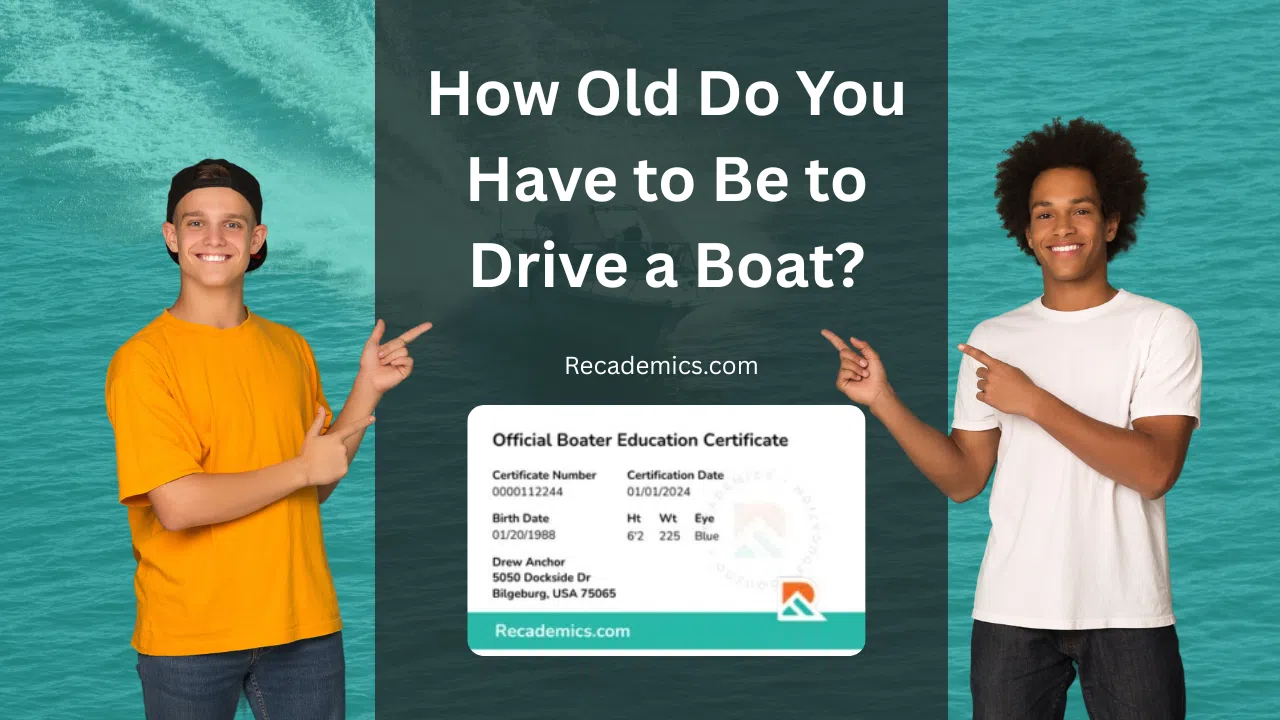
Minimum Age to Operate a Boat in Indiana
General Boating Age Requirements
Indiana law focuses on motorized boats with engines greater than 10 horsepower:
- Under 15 years old:
May not operate a motorboat or other watercraft with an engine that produces more than 10 horsepower. - Age 15 (no driver’s license yet):
May operate a motorboat over 10 horsepower only if they:- Successfully complete an Indiana Department of Natural Resources (DNR)–approved boater education course, and
- Carry an Indiana identification card (issued by the BMV) while operating.
- Age 16 and older:
A valid Indiana driver’s license satisfies the state’s operator-credential requirement to run a motorboat or PWC over 10 horsepower on public waters.
For non-motorized boats (kayaks, canoes, rowboats) and very small motors (10 horsepower or less), Indiana’s statewide age rules are less specific. Local ordinances, rental businesses, or lake authorities may still enforce their own minimum-age or supervision rules for these craft, so operators should always confirm local requirements in addition to state law.
Supervision and Adult-Onboard Requirements
Unlike some states, Indiana’s boating laws do not create a supervised-operation exception that would allow children under 15 to legally operate a motorboat over 10 horsepower while an adult is onboard. Instead, the law prohibits those under 15 from operating higher-horsepower boats at all.
Allowing someone to operate your boat when their operation would violate Indiana’s boating laws (for example, letting a child under 15 drive a motorboat over 10 horsepower) can result in a Class C infraction for the person who permitted it.
Because the statutes don’t define “adult” in a specific supervision rule for boat operation, this article uses “adult” in the everyday sense: generally, someone 18 or older who meets all licensing and safety requirements.
Boating License or Education Requirements
Does Indiana Require a Boating Safety Course?
Indiana’s system ties boater education to whether you have a driver’s license:
- If you have a valid driver’s license (typically 16+):
You may operate a motorboat or PWC over 10 horsepower on Indiana public waters using your driver’s license as your operator credential. A boating safety course is strongly recommended for safety but is not required by state law in this situation. - If you do not have a driver’s license and are at least 15 years old:
You must:- Successfully complete a DNR-approved boating safety course, and
- Carry an Indiana ID card issued by the BMV while operating.
The Indiana DNR links boaters to approved online and in-person boating courses through its Boating Education & Safety page, where you can find classes that satisfy the education requirement.
Age Exceptions and Grandfather Clauses
Indiana’s boating laws do not rely on a “born before/after” grandfather date the way some states do. Instead, the main age-related exceptions work like this:
- 15-year-old operators without a driver’s license can legally operate a motorboat or PWC over 10 horsepower only by completing a DNR-approved boating safety course and carrying an Indiana ID card while operating.
- Operators 16 and older who hold a valid driver’s license are not required to complete a boater education course, although training is recommended and may be required by some rental companies or insurance providers.
There is no separate “grandfather clause” that permanently exempts older boaters based on birth date alone—Indiana instead uses the status of your driver’s license to determine when a separate boating card is required.
How Old Do You Have to Be to Drive a Jet Ski (PWC) in Indiana
Minimum Age to Operate a PWC
Personal watercraft (PWCs), such as jet skis, are treated like motorboats under Indiana’s age and credential rules when they are powered by more than 10 horsepower:
- Under 15 years old:
May not operate a PWC at all. - Age 15 (no driver’s license yet):
May operate a PWC only if they:- Complete a DNR-approved boating safety course, and
- Carry an Indiana ID card issued by the BMV while operating.
- Age 16 and older with a valid driver’s license:
May operate a PWC on Indiana public waters using their driver’s license as their operator credential. A separate boating card is not required by state law but is still a good idea for safety and may be preferred by rental companies.
Indiana also requires PWC operators and passengers—and anyone being towed behind a boat or PWC—to wear a U.S. Coast Guard–approved life jacket.
Penalties for Violating Age Laws
Operating a motorboat or PWC in violation of Indiana’s licensing and age requirements can lead to legal penalties:
- Class C infraction:
Violations of many boating-operation rules, including allowing an improperly credentialed person to operate your boat, are typically treated as Class C infractions under Indiana law. A Class C infraction can carry a fine of up to $500. - More serious offenses:
Operating any motorboat while intoxicated is a criminal offense and may be charged as a misdemeanor or felony, depending on whether there are prior convictions or injuries. Penalties can include fines, jail time, and suspension of driving privileges for both boats and motor vehicles.
In addition to state penalties, rental companies and marinas often have their own policies, which may include immediate termination of rental contracts and additional fees if age or credential rules are violated.
How to Get Certified to Drive a Boat in Indiana
Steps to Getting Your Boating License
If you are 15 or older and do not yet have a driver’s license—or you simply want extra training—the process to get legal and safe on Indiana’s waters generally looks like this:
- 1. Take an approved online boating safety course.
Enroll in an Indiana DNR–approved boater education course offered online or in person. The DNR’s boating education page lists approved providers. - 2. Pass the final exam and receive your certification.
Complete all course units and pass the final examination. You’ll receive proof you successfully met Indiana’s education standard for motorboat and PWC operation. - 3. Obtain and carry your state ID if you do not have a driver’s license.
Visit the Indiana BMV to obtain an Indiana identification card. When operating a motorboat or PWC over 10 horsepower without a driver’s license, you must carry both your boating safety course completion proof and your Indiana ID card. - 4. Keep your proof of competency onboard.
Whether you rely on a driver’s license (age 16+) or a boater education card plus Indiana ID (age 15+ without a license), always carry your credential while operating. Law enforcement officers can request to see it during safety checks.
Boating Safety Tips for Young Operators
- Always wear a life jacket.
Indiana law requires life jackets for young passengers and for anyone operating or riding on a PWC or being towed behind a boat. Choosing to wear a properly fitted life jacket at all times is the safest approach for boaters of any age. - Never operate without supervision if required by law or common sense.
Even when supervision isn’t explicitly written into Indiana’s age rules, new boaters should have an experienced adult onboard—especially during their first seasons on the water. - Learn navigation rules and right-of-way basics.
Understanding buoys, channel markers, speed-limit zones, and who must yield in crossing or overtaking situations is essential to avoiding collisions. - Take your boating safety course early.
Teens who complete boater education before turning 15 will be ready to operate legally as soon as they meet the age and ID requirements. Courses also teach important topics like weather awareness, emergency procedures, and safe towing practices. - Respect local rules and lake-specific restrictions.
Many Indiana lakes and reservoirs have additional speed limits, no-wake zones, or PWC-specific restrictions. Always read posted signs and check local regulations before heading out.
Summary
In Indiana, the key age rules for operating a boat or jet ski are:
- Under 15 years old: May not operate a motorboat or PWC with more than 10 horsepower.
- Age 15 without a driver’s license: May operate a motorboat or PWC over 10 horsepower only after completing a DNR-approved boating safety course and carrying an Indiana ID card issued by the BMV.
- Age 16 and older with a valid driver’s license: May operate a motorboat or PWC over 10 horsepower using their driver’s license as their operator credential; boating education is strongly recommended for safety.
Violations of Indiana’s boating laws can lead to Class C infractions (often up to a $500 fine) and, in serious cases such as boating while intoxicated, misdemeanor or felony charges.
Understanding and following Indiana’s age and education rules—combined with strong boating-safety habits—helps young and new operators stay legal and safe on the water. Completing an approved boating safety course through a trusted provider like Recademics is one of the best ways to build skills, meet state requirements, and enjoy Indiana’s lakes and rivers with confidence.