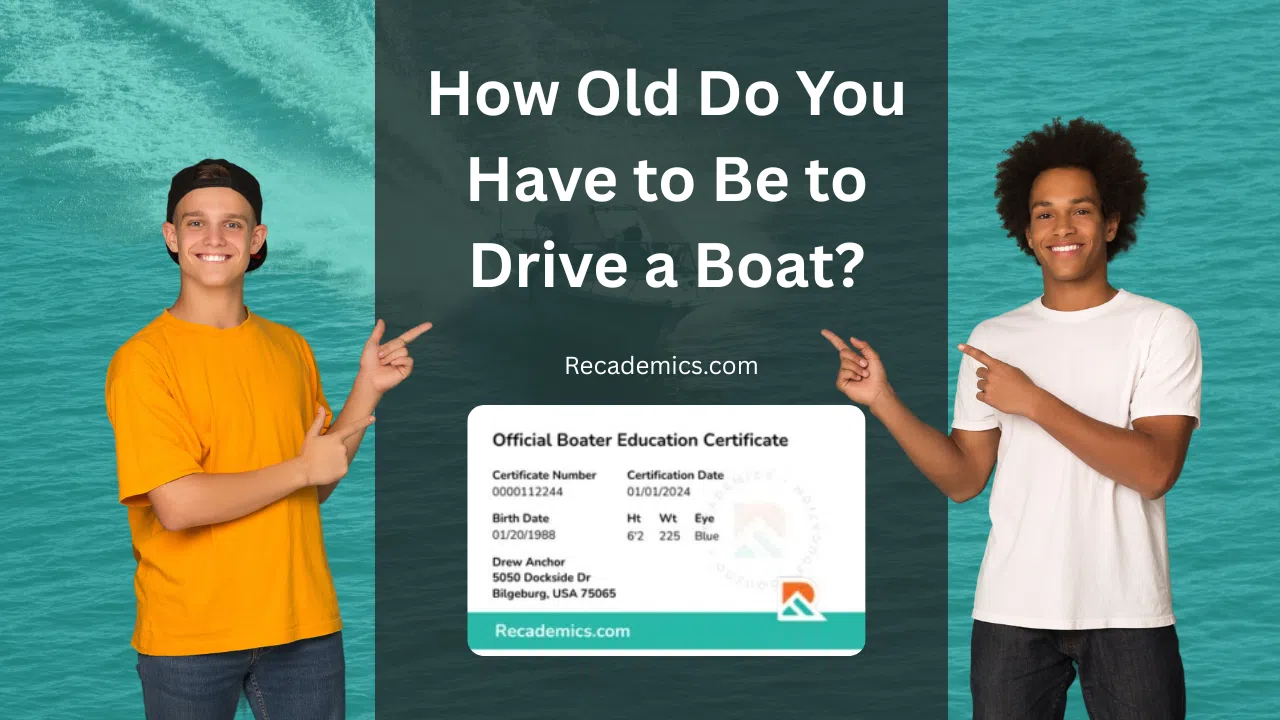
Take an Official State-Approved Boater Safety Course

How Old Do You Have to Be to Drive a Boat in Delaware?

Quick Answer

In Delaware, there is no fixed minimum age written into law for operating a motorized boat (other than a personal watercraft), but there is a strict education rule: anyone born on or after January 1, 1978 must complete an approved boating safety course before operating any motorized vessel on Delaware waters. Personal watercraft (jet skis) are treated differently—operators must be at least 14 years old, and teens ages 14–15 must have an adult onboard.

Because of these rules, the practical “key ages” in Delaware are:

  • Motorboats (general): No specific minimum age in statute, but operators born on or after 1/1/1978 must hold a boating safety education certificate.
  • Personal watercraft (PWC/jet skis): Minimum age 14 with a boating safety course; ages 14–15 must have an adult (18+) onboard; 16+ with a certificate may operate independently.

Age rules in Delaware depend on:

  • The type of boat (motorboat vs. PWC vs. non-motorized craft)
  • Whether the operator was born on or after January 1, 1978
  • Whether the operator has completed a state-approved boating safety course
  • Whether an adult is onboard when required for younger PWC operators

Find a Delaware-approved boater safety course →

How Old Do You Have to Be to Drive a Boat?

Minimum Age to Operate a Boat in Delaware

General Boating Age Requirements

For most motorboats and powerboats, Delaware law does not set a specific minimum age to operate the vessel. Instead, the state focuses on education: anyone born on or after January 1, 1978 must successfully complete an approved boating safety course before operating a motorized boat on Delaware waters.

Important points for general (non-PWC) motorboats:

  • No fixed minimum age: Delaware does not list a minimum age for operating a motor-powered vessel other than a PWC.
  • Education-based rule: If the operator was born on or after 1/1/1978, they must hold a boating safety education certificate to operate any motorized vessel, regardless of age.
  • Non-motorized craft: Canoes, kayaks, and paddleboards do not require a boating safety certificate by law, but all life jacket and safety equipment rules still apply.

In practice, families and rental companies often set their own higher age limits (for example, requiring operators to be 16 or 18) even though state law does not specify a minimum age for non-PWC motorboats.

Supervision and Adult-Onboard Requirements

For general motorboats, Delaware does not require an adult to be onboard when a minor operates a motor-powered vessel (other than a PWC). However, younger or inexperienced operators should still be closely supervised for safety, and many marinas will not rent to minors without an adult.

For personal watercraft (PWC), supervision rules are much stricter:

  • Ages 14–15: May operate a PWC only if:
    • They have successfully completed an approved boating safety course, and
    • An adult (generally considered someone 18 or older) is onboard and in a position to take immediate control.
  • Ages 16 and older: May operate a PWC without adult supervision if they hold a valid boating safety education certificate.

Even when not required by law, Delaware’s boating authorities strongly encourage adult supervision whenever young or inexperienced boaters are operating a vessel.

Boating License or Education Requirements

Does Delaware Require a Boating Safety Course?

Yes. Delaware uses a boating safety education certificate (sometimes informally called a “boating license”) instead of a traditional driver-style license. The key rule is:

  • Anyone born on or after January 1, 1978 must complete a Delaware-approved boating safety course before operating any motorized boat or PWC on Delaware waters.

Approved courses are coordinated through the Delaware Department of Natural Resources and Environmental Control (DNREC) Office of Boating Safety and Education and its partners, and include both online and classroom options.

Prospective boaters can find official course options on the DNREC Boating Safety page or by enrolling in a Delaware-approved course provider such as Recademics.

Age Exceptions and Grandfather Clauses

  • Born before January 1, 1978: Not required by law to complete a boating safety course in order to operate a motorized vessel, though the state strongly recommends training for all boaters.
  • Non-motorized vessels: Paddlers and sailors on non-motorized craft are not subject to the boater education requirement, but all navigation and safety laws still apply.
  • Visitors from other states: Delaware generally recognizes NASBLA-approved boating education cards from other states, so visiting boaters may use their home-state card as proof of education.

Separate age-based rules apply to PWC operators and are discussed in more detail below.

How Old Do You Have to Be to Drive a Jet Ski (PWC) in Delaware?

Minimum Age to Operate a PWC

Delaware sets clear age and education rules for personal watercraft (PWC), such as jet skis:

  • Minimum age: You must be at least 14 years old to operate a PWC in Delaware.
  • Boating safety course: All PWC operators born on or after January 1, 1978 must complete an approved boating safety course and carry their education certificate while operating.
  • Ages 14–15: Must have completed a boating safety course and may operate only with an adult (18+) onboard and able to take immediate control.
  • Ages 16 and older: With a valid boating safety education certificate, may operate a PWC without adult supervision.

Horsepower-specific thresholds are not used for PWC in Delaware; the rules above apply to all personal watercraft regardless of engine size.

Penalties for Violating Age Laws

Operating a PWC or other motorized vessel in Delaware without meeting the required age and education rules is a violation of the state’s boating safety education law. Violations of the education requirement are treated as environmental violations under Delaware Code (23 Del. Code § 2225), which can result in citations, fines, and increased penalties for repeat offenses.

In practice, if someone operates a PWC underage or without the required boating safety certificate, Delaware Natural Resources Police may:

  • Issue a citation and monetary fine
  • Order the operator off the water until a qualified adult takes over
  • Document the violation as a boating safety education offense, which can carry higher penalties if repeated

Separate and much more serious penalties apply for boating under the influence (BUI), including substantial fines, possible jail time, and potential loss of boating privileges.

How to Get Certified to Drive a Boat in Delaware

Steps to Getting Your Boating License

Delaware’s “boating license” is a boating safety education certificate issued after you complete an approved course. To get certified:

  • Step 1 – Enroll in an approved course: Choose a Delaware-approved boating safety course (online or in-person) that meets DNREC requirements.
  • Step 2 – Complete the instruction and pass the exam: Study Delaware boating laws, navigation rules, required equipment, and safe operating practices, then pass the final exam.
  • Step 3 – Receive your boating safety education certificate: After passing, you’ll receive a card or certificate recognized by Delaware DNREC.
  • Step 4 – Carry proof while operating: If you are required to have a certificate (born on or after 1/1/1978 or operating a PWC within age rules), you must carry your card on board and present it to law enforcement when requested.

Boating Safety Tips for Young Operators

  • Always wear a life jacket: Delaware requires that all children 12 and under wear a U.S. Coast Guard–approved life jacket while underway, and everyone on a PWC must wear one.
  • Never operate without adult supervision if required by law: PWC operators ages 14–15 must have an adult onboard, and younger or inexperienced operators of any vessel should always be supervised.
  • Learn navigation rules and right-of-way basics: Understanding buoys, channel markers, and right-of-way rules is essential to avoiding collisions and citations.
  • Take your boating safety course early: Completing an approved course as soon as you are eligible gives you more time on the water operating legally and confidently.
  • Know the local conditions: Check weather, tides, and local regulations before heading out, and always operate at a safe speed for the area and conditions.

Summary

Delaware does not set a specific statutory minimum age for operating a motorized boat (other than personal watercraft), but anyone born on or after January 1, 1978 must complete an approved boating safety course before operating a motorized vessel. For PWCs, the rules are stricter: operators must be at least 14 years old, 14–15-year-olds must have an adult onboard, and 16+ with a valid boating safety education certificate may operate independently.

Violating these age and education rules can result in citations, fines, and potentially more serious consequences for repeat or related offenses. To stay legal and safe, new boaters in Delaware should complete their official boating education as early as possible and always follow DNREC’s safety guidance.

If you’re ready to get started, you can complete an official Delaware-approved course through Recademics and earn the boating safety education certificate you need to operate a boat or jet ski responsibly on Delaware waters.