
Take an Official State-Approved Boater Safety Course
Quick answer: Massachusetts does not issue a driver-style “boating license,” but operators must meet the state’s mandatory education rules. Beginning April 1, 2026, a state-approved Boating Safety Education Certificate is required to operate any motorboat or personal watercraft (PWC) in Massachusetts. People born after January 1, 1989 must have the certificate by April 1, 2026 (with enforcement of penalties starting September 1, 2026); those born on or before January 1, 1989 must obtain it by April 1, 2028. Separate minimum age rules also apply—most notably, PWC operators must be at least 16. Always verify details on the Massachusetts Environmental Police (MEP) website.
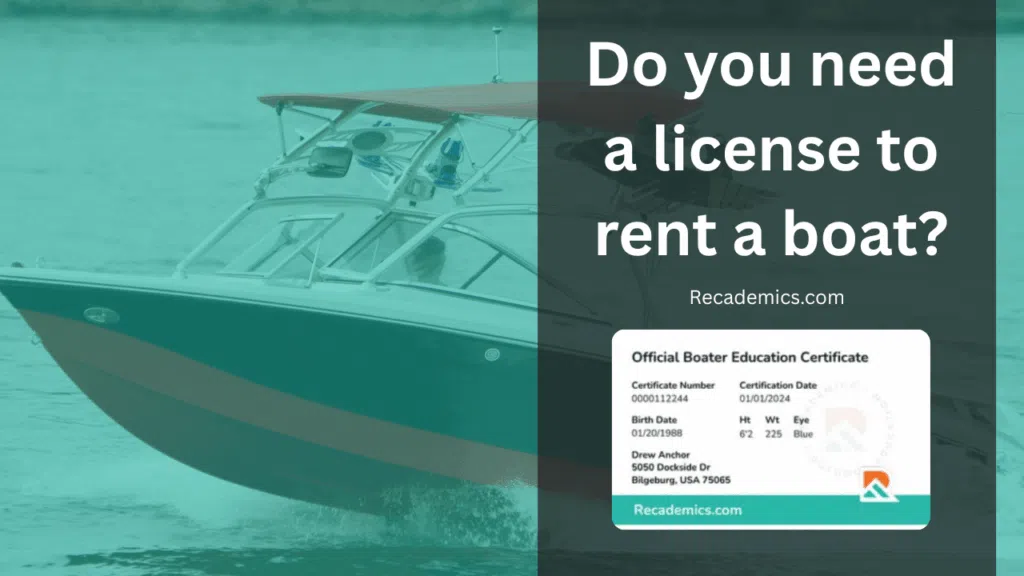
Expect to present a government-issued photo ID, sign a rental agreement, list all intended operators, and leave a deposit. Marinas commonly verify that operators meet Massachusetts education requirements based on birthdate and vessel type, check minimum age for PWCs, and set operating-area or weather restrictions.
Most liveries provide a dockside orientation before departure. Briefings typically cover starting and stopping, headway speed/no-wake zones, local hazards, required safety equipment, navigation basics, and emergency procedures. Some may require a short skills check—especially for PWCs or higher-horsepower boats.
Visitors must follow Massachusetts rules while on Commonwealth waters. If you completed a state-approved/NASBLA-recognized course elsewhere, carry your original education card and a photo ID; many liveries accept this as proof of training. Confirm acceptance with your rental company and review any local waterway restrictions.
If a licensed captain or guide operates the vessel, passengers do not need to hold a boating safety certificate. If anyone in your party will take the helm, that person must meet Massachusetts age and education requirements.
Choose a Massachusetts-approved course that follows state and NASBLA standards and covers Massachusetts laws, navigation rules, required equipment, and safe operation. Successful completion earns a Boating Safety Education Certificate.
Massachusetts accepts both formats when state-approved. Always verify approval on the official state website before enrolling.
Most students should plan for six to eight hours of learning plus exam time. Online courses may be self-paced; classroom sessions are often completed in a half to full day.
Operating a motorboat or PWC without the required education—or failing to carry proof when it’s required—can result in citations and fines. Massachusetts also enforces Boating Under the Influence (BUI) with significant penalties, including fines, possible jail time, and loss of boating privileges.
Liveries must rent only to qualified operators and provide legally required safety equipment. They may refuse rentals or limit operations (route restrictions, weather holds, mandatory briefings) if legal requirements are not met or conditions are unsafe.
The Massachusetts Environmental Police enforce boating laws on state waters, often alongside local marine units and, on federally controlled/coastal waters, the U.S. Coast Guard.
Massachusetts uses a Boating Safety Education Certificate, not a traditional license. The certificate proves you completed an approved course and, under the new statewide mandate, will be required for all motorboat and PWC operators according to the phase-in schedule.
Yes. Bring your government ID and any state-approved/NASBLA-recognized boater education card you hold. You must follow Massachusetts age rules and the statewide education mandate.
Yes. PWC operators must be at least 16, and they must meet Massachusetts’s education-certificate requirements based on the statewide phase-in schedule.
Generally, proof of an approved boater education course from another state is accepted. Carry the original card and a photo ID, and follow Massachusetts operating and age rules.

This is a FREE Boating course.